
Overview
Understanding minimally invasive urological surgery

Minimally invasive urological surgery is a modern way to treat problems of the kidneys, bladder, prostate, and urinary tract. Instead of making one large cut, the surgeon uses a few small cuts or, in some procedures, the body's natural urinary passage to perform the surgery.
Using a tiny camera and special instruments, the surgeon can see clearly and work with great precision. Because the cuts are much smaller, there is less damage to surrounding area.
This often means:
- Less pain after surgery
- Smaller scars
- Lower risk of infection
- Shorter hospital stay
- Faster recovery and return to normal activities
Different types of minimally invasive surgery
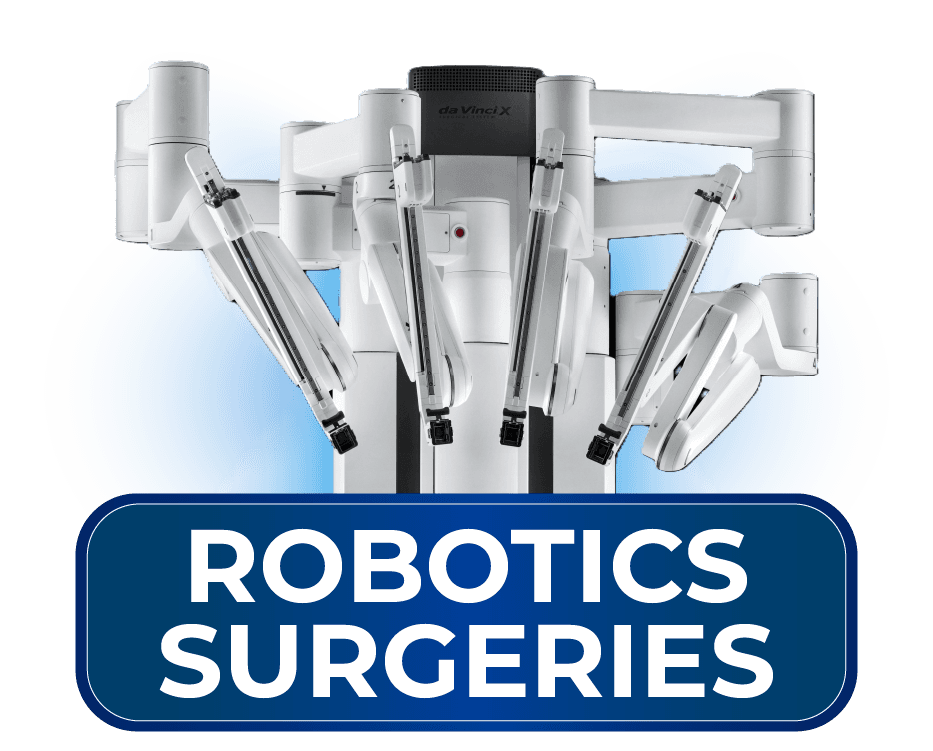
Robotic urological surgery

- Robotic surgery is an advanced type of minimally invasive surgery
- The surgeon controls robotic instruments through a few small cuts using a console in the operating room
- The robot does not perform the surgery on its own, it is fully controlled by the surgeon
- The robotic system provides a clear, magnified 3D view of the treatment area and allows the surgeon to make very precise movements
- This can be especially helpful when operating around delicate structures such as nerves and blood vessels
Benefits compared with open surgery
Feature | Open surgery | Robotic urological surgery |
Surgeon's view | Standard view | Clear 3D view |
Movement of instruments | Less flexible | More flexible and precise |
Accuracy | Hand-controlled | More precise movements with reduced hand tremor |
Recovery | Takes longer | Often quicker |
Keyhole (Laparoscopic) surgery

- Most minimally invasive surgeries are performed through a few small "keyhole" cuts
- These small openings allow the surgeon to insert a tiny camera and special surgical instruments
- The camera, called a laparoscope, has a light and sends clear images to a screen, helping the surgeon see inside your body during the operation
- The surgeon uses the other small openings to perform the surgery with long, narrow instruments
Benefits compared with open surgery
Feature | Open surgery | Laparoscopic approach |
Incision size | Large (6-10 inches) | Small (0.5-1 inch) |
Recovery time | Extended | Shorter |
Post-op pain | Significant | Minimal |
Endoscopic surgery

- An endoscope is a thin tube with a light and a small camera that allows your surgeon to see inside your body
- Some endoscopes can be passed through a natural opening in your body, so no cuts in the skin are needed
- The surgeon uses long, narrow instruments through the endoscope to perform the procedure.
- This is called endoscopic surgery. Depending on the procedure, the surgeon may work within the wall of an organ (endoluminal surgery) or through the wall of an organ (transluminal surgery)
Common minimally invasive urological procedures
Minimally invasive surgery can be used for many common urological procedures, including:
- Kidney removal (nephrectomy): Removal of part or all of a kidney
- Prostate removal (prostatectomy): Removal of the prostate gland
- Pelvic organ prolapse repair (sacrocolpopexy): A procedure to repair and support organs that have dropped from their normal position in the pelvis
Tools and equipment used in minimally invasive surgery
- Endoscopes: Long, narrow tubes with a lighted video camera at the end, available in different sizes and either rigid or flexible
- Imaging equipment: Monitors display video from the endoscope, while ultrasound (sound-wave imaging) and fluoroscopy (live X-ray imaging) help locate the surgical site
- Trocars: Tubes placed through small incisions (ports) that allow surgical instruments, including endoscopes, to pass into the body
- Insufflators: Deliver low-pressure carbon dioxide (CO₂) gas into the body cavity to create space for better visibility and access
- Balloons: Inflatable balloons used to create space only where needed by being inflated with gas
- Surgical instruments: Long, narrow instruments designed to operate in small spaces through trocars, endoscopes, or catheters
- Robotic surgical system: A robot-assisted system with an operating console, video screen, and equipment cart holding the camera and surgical instruments, while the console controls the robotic arms
Before the procedure
Before the procedure, your doctor may:
- Check your general health
- Perform blood and urine tests
- Arrange for imaging tests (CT scan, ultrasound or X-ray) to assess the treatment area
- Review your medicines, especially blood thinners
- Ask about any allergies
- Advise you to stop eating and drinking for several hours before the procedure
- Tell you which medicines you can take with a small sip of water
What happens during minimally invasive surgery?
The exact steps will depend on the type of surgery you are having, but most minimally invasive procedures follow a similar process.
Anaesthesia Before your surgery, you will be given medicine to prevent pain and keep you comfortable. Depending on your procedure, you may be asleep during the operation (general anaesthetic) or awake with the treatment area numbed (local anaesthetic). Your surgeon and anaesthetist will explain which option is best for you.
Small cuts (incisions) Instead of one large cut, your surgeon makes a few small incisions, or in some procedures, no incision at all. A tiny camera and special surgical instruments are inserted through these openings to perform the surgery.
Surgery and recovery Minimally invasive surgery may take a little longer than traditional open surgery because it uses specialised instruments and techniques. However, the smaller incisions usually mean less pain, a lower risk of complications, a shorter hospital stay and a faster recovery. Many patients are able to return home on the same day or within a short time after their procedure.
Recovery and after your surgery
Recovery is different for everyone and depends on the type of procedure you have. Your healthcare team will give you instructions to help you recover safely and comfortably.
Pain management It is normal to have some discomfort after surgery. Take your pain medication as directed and let your healthcare team know if your pain is not well controlled.
Activity Light activities, such as walking, are encouraged to help your recovery. Avoid heavy lifting and strenuous exercise until your surgeon advises it is safe.
Wound care Keep your incision sites clean and dry, and follow your surgeon's instructions for caring for your wounds.
Follow-up appointments You will have a follow-up appointment to check your recovery, discuss your results, and answer any questions you may have.
Returning to normal activities Most people recover more quickly after minimally invasive surgery than after traditional open surgery. Your surgeon will advise you when it is safe to return to work, driving, exercise, and other daily activities
Benefits of minimally invasive surgery
Minimally invasive surgery offers many benefits, including:
- Less damage to the body during surgery
- Less blood loss
- Lower risk of complications
- Lower risk of infection
- Smaller scars
- Shorter hospital stay
- Faster recovery
- Less pain and a reduced need for pain medication
- Some procedures may not require a general anaesthetic
- May be an option for some patients who are not suitable for traditional open surgery
Things to consider
While minimally invasive urological surgery offers many benefits, it may not be suitable for everyone.
Some things to consider include:
- Not all urological conditions can be treated with minimally invasive surgery
- Some procedures may take longer than traditional open surgery
- In some emergencies, open surgery may be the safer option
- During some laparoscopic or robotic procedures, gas is used to create space inside the stomach area
- This may not be suitable for patients with certain heart or lung conditions
- Your urologist will discuss the most appropriate treatment option based on your condition and overall health
Myths and facts
Myth 1: Minimally invasive surgery is less effective than open surgery.
Fact: For many urological conditions, it is as effective as open surgery while offering a faster recovery.
Myth 2: Robotic surgery is performed by the robot alone.
Fact: The surgeon controls every movement of the robotic system throughout the procedure.
Myth 3: Minimally invasive surgery always means no cuts.
Fact: Most procedures use a few small incisions, while some are performed through the natural urinary passage without any skin cuts.
Myth 4: Recovery is immediate after minimally invasive surgery.
Fact: Recovery is usually faster than open surgery, but it still takes time and varies depending on the procedure and the individual.
Myth 5: Everyone is suitable for minimally invasive surgery.
Fact: The best surgical approach depends on your condition, overall health, and your surgeon's assessment.
References
- Cleveland Clinic. Minimally Invasive Surgery. [Online] Available from: Minimally Invasive Surgery: What It Is, Types, Benefits & Risks. Accessed on 16 July 2026.
Speak to a urology specialist
Get an expert opinion and a personalised treatment plan at Sterling Hospitals.