
Common causes include:
Causes/Why It Happens
Common causes include:
- Ageing
- Osteoarthritis (‘wear and tear’ arthritis)
- Previous injury or fracture
- Excess body weight
- Rheumatoid arthritis (joint inflammation)
- Repetitive stress on joints
Symptoms
People may experience:
- Joint pain during walking or climbing stairs
- Stiffness after sitting or resting
- Swelling around the joint
- Difficulty bending the knee or hip
- Reduced movement
- Trouble performing daily activities
Diagnosis and Investigations
Doctors usually diagnose joint arthritis using:
- Physical examination: Knee motion, strength, stability and overall leg alignment
- Imaging tests: X-ray, computed tomography (CT) scan or magnetic resonance imaging (MRI)
- Blood tests
Treatment Options
Non-surgical treatments
Doctors may first recommend:
- Pain-relief medicines
- Physiotherapy
- Weight reduction
- Exercise
- Knee braces or walking support
- Joint injections
Surgical treatment
If pain becomes severe and affects daily life, joint replacement surgery may be advised.
Robotic joint replacement may help improve:
- Accuracy of implant placement
- Joint alignment
- Recovery experience
- Long-term joint function
Procedure Details
What is the procedure and why is it done?
In robotic joint replacement:
- Damaged cartilage and bone are removed
- Artificial parts made of metal, ceramic, or plastic are placed in the joint
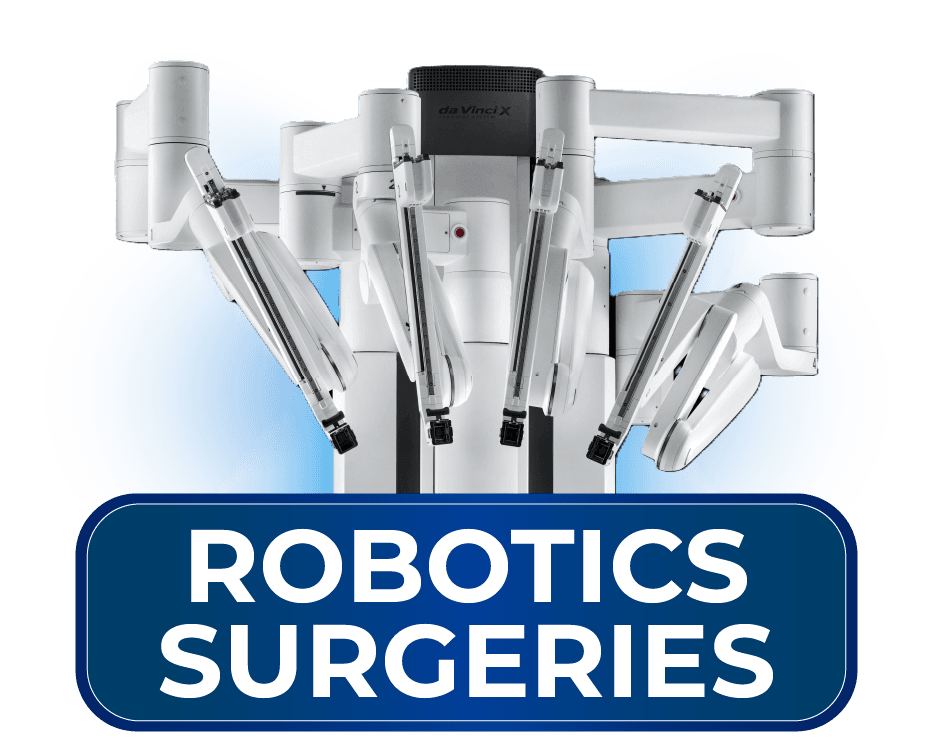
- A robotic system helps the surgeon position the implant more precisely
The procedure aims to:
- Reduce pain
- Improve movement
- Help patients return to normal activities
Before the Procedure
Key instructions
Your doctor may advise:
- Stop certain medicines such as blood thinners
- Avoid smoking and alcohol
- Inform the doctor about allergies or infections
Preparation guidelines
- Do not eat or drink for several hours before surgery
- Arrange support at home after discharge
- Complete blood tests and scans
- Start simple exercises if advised
Procedure Overview
Step-by-step (simple explanation)
- The patient is given anaesthesia
- The surgeon makes a cut over the joint
- The robotic system helps guide bone preparation
- Damaged bone and cartilage are removed
- Artificial joint parts are placed carefully
- The wound is closed with stitches or staples
Duration of procedure: Usually 1 to 3 hours, depending on the joint and complexity
Risks and Complications
Like all surgeries, robotic joint replacement has some risks, including:
- Infection
- Blood clots
- Bleeding
- Pain or swelling
- Stiffness
- Nerve or blood vessel injury
- Implant loosening over time
Benefits and Expected Outcomes
Benefits
- Better pain relief
- Improved walking and movement
- More accurate implant positioning
- Better joint alignment
- Faster return to daily activities for many patients
During Hospital Stay
What to expect
- Monitoring in the recovery room
- Pain management medicines
- Early walking with support
- Physiotherapy exercises
Hospital stay
Most patients stay 1–3 days in the hospital, whereas some patients may go home earlier depending on recovery.
Recovery and Aftercare
Recovery timeline
- Walking begins within 1–2 days
- Daily activities improve over 4–6 weeks
- Full recovery may take several months
Activity restrictions
Initially avoid:
- Heavy lifting
- Running or jumping
- Sudden twisting movements
Lifestyle and Prevention
Recommended diet
Eat foods rich in:
- Protein
- Calcium
- Iron
- Drink enough water
Long-term care
- Continue exercises regularly
- Maintain healthy body weight
- Attend follow-up visits
Preventing joint problems
- Stay physically active
- Avoid obesity
- Protect joints from injury
When to Contact a Doctor
Seek medical help if you notice:
- Fever
- Increasing pain or swelling
- Redness or pus from the wound
- Sudden leg swelling
Follow-up schedule
Regular check-ups are usually advised:
- Within a few weeks after surgery
- Then periodically over the years
Myths and Facts
The robot performs the surgery alone.
The surgeon controls the entire procedure.
Joint replacement is only for elderly people.
Younger patients with severe arthritis may also benefit.
Recovery takes years.
Most people improve significantly within weeks to months.
Frequently Asked Questions (FAQs)
Is robotic joint replacement painful?
Pain is controlled with medicines and anaesthesia. Most patients feel gradual improvement after surgery.
How soon can I walk?
Many patients start walking with support within 24 hours.
Will the artificial joint feel natural?
Most patients report improved comfort and movement after recovery.
Can arthritis come back after replacement?
The damaged joint surface is replaced, so severe arthritis in that joint usually does not return.
Speak to an orthopaedic specialist
Get an expert opinion and a personalised treatment plan at Sterling Hospitals.