
Robotic Surgery
Dr. Sagar Joshi
Consultant- Robotic, Laparoscopic, Transplant Surgeon & Urologist
Sterling Hospitals, Race Course Road | Sterling Hospitals, Bhayli, Vadodara
View Profileat Sterling Hospitals

At Sterling Hospitals, we remain committed to excellence in surgical care and maintaining high standards of treatment for a wide range of procedures and specialties. As part of this commitment, we bring together advanced robotic technology, experienced surgeons and patient-centred care to provide precise, minimally invasive treatment with the aim of achieving the best possible outcome for every patient.
Robotic surgery is a minimally invasive approach in which a surgeon performs an operation with the assistance of a robotic surgical system. It can be used for procedures that may otherwise require conventional open surgery or can be performed using other minimally invasive techniques. Robotic surgery is used across specialties such as urology, gynaecology, gastrointestinal surgery, general surgery and cancer surgery.
During robotic surgery, a few small incisions are made in the area being treated, through which a small camera and specialised surgical instruments are placed. Once the camera is in position, it gives the surgeon a clear, magnified view of the area being operated on.
The surgeon sits at a console beside the operating table and uses hand controls to guide the surgical instruments. The robotic system translates these movements into precise movements inside the body, while the surgeon remains in control throughout the procedure.
This approach allows the surgeon to work through small incisions while having a clear view of the surgical area and precise control over the instruments.
Both robotic surgery and laparoscopic surgery are minimally invasive approaches that use small incisions instead of a large surgical opening. The main difference is how the surgical instruments are controlled.
In laparoscopic surgery, the surgeon directly guides long, specialised instruments while viewing the surgical area on a monitor. In robotic surgery, the surgeon controls the instruments from a console, while the robotic system translates the surgeon’s hand movements into precise movements of the instruments inside the body.
Robotic surgery can offer greater flexibility and control during procedures that involve delicate or complex movements. Laparoscopic surgery, on the other hand, allows the surgeon to perform many procedures through small incisions using specialised instruments and a laparoscopic camera. The choice of surgical approach depends on the type of procedure, the patient's condition and the surgeon's clinical judgement.
Robotic surgery combines minimally invasive techniques with precise control of surgical instruments. Depending on the procedure and the patient's condition, this approach may offer benefits such as:
Robotic surgery is performed through small incisions rather than a large surgical opening. This may cause less disruption to the surrounding tissues.
The robotic instruments allow the surgeon to make precise movements and provide greater control during delicate surgical steps.
A magnified 3D view of the surgical area helps the surgeon see the structures involved in greater detail during the procedure.
The use of small incisions and precise instrument movements may help reduce blood loss during certain procedures.
As robotic surgery is minimally invasive, recovery may be quicker than with open surgery in some cases, allowing a patient to return to normal activities sooner.
Some patients may be able to leave the hospital sooner after robotic surgery compared with open surgery, depending on the procedure and individual recovery.
Like any surgical procedure, robotic surgery has certain risks and limitations. The risks can vary depending on the procedure, the patient's overall health and other individual factors.
The use of specialised robotic equipment can make robotic surgery more expensive than some conventional surgical approaches. The actual cost depends on the procedure, hospital, robotic system used and other treatment-related factors.
Robotic surgery is used for a range of procedures across different medical specialities. The type of robotic procedure depends on the condition being treated, the surgery required and whether robotic assistance is suitable for the individual case. At Sterling Hospitals, robotic-assisted procedures are available across specialities such as urology, gynaecology, general and gastrointestinal surgery, and cancer surgery.
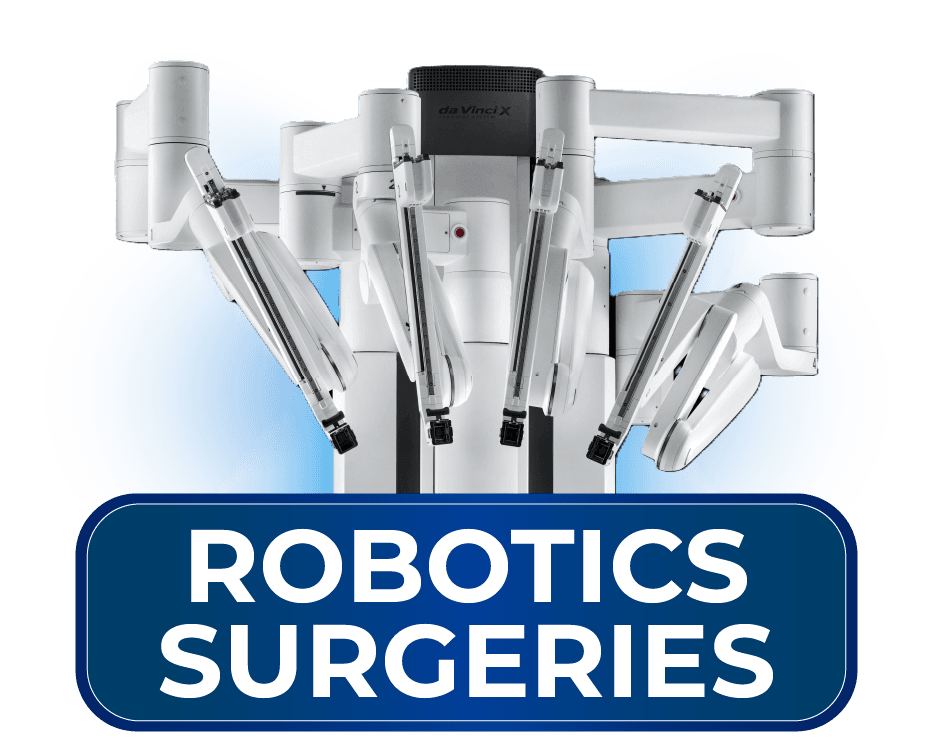
Different robotic surgical systems are designed for different types of procedures. At Sterling Hospitals, the da Vinci X Surgical System is used for robotic-assisted procedures across specialties such as urology, gynaecology, gastrointestinal surgery and cancer surgery.
Enhanced Precision and Control
The system translates the surgeon’s hand movements into precise movements of the surgical instruments, while also filtering natural hand tremors.
Magnified 3D High-Definition Vision
The camera provides a magnified 3D high-definition view of the surgical area, giving the surgeon greater visual detail and depth perception.
Wristed Instruments
The robotic instruments can bend and rotate through a wide range of movement, allowing the surgeon to perform delicate movements that can be difficult with conventional straight instruments.
Access to Difficult-to-Reach Areas
The system is designed to support minimally invasive surgery in confined areas of the body, including the pelvis, abdomen and chest.
Firefly Fluorescence Imaging
Firefly imaging uses fluorescence to provide real-time visual information about structures such as blood vessels and tissue perfusion during selected procedures.
Advanced Surgical Instruments
The system supports specialised instruments for tasks such as tissue handling, vessel sealing and stapling, which the surgeon controls from the console.
At Sterling Hospitals, we have a team of specialists with extensive experience in robotic-assisted surgery across multiple surgical specialities. Explore their profiles to learn more about their areas of expertise and the procedures they perform.
The cost of robotic surgery in Vadodara varies depending on the type and complexity of the procedure, the hospital, the surgical team, the robotic system used and the duration of hospitalisation. Expenses such as diagnostic tests, medicines, anaesthesia, consumables and post-operative care also contribute to the overall cost.
Robotic surgery involves more than the technology used during the procedure. Choosing a hospital with experienced surgical specialists, appropriate robotic technology and the infrastructure to support care before and after surgery is equally important. Here are some of the reasons patients and their families choose Sterling Hospitals for robotic surgery.
Sterling Hospitals uses the da Vinci X Surgical System for robotic-assisted procedures across several surgical specialities. The system gives surgeons enhanced visualisation, precise instrument control and greater flexibility during complex surgical steps.
Robotic procedures are performed by surgeons with expertise in the relevant surgical speciality, including urology, gynaecology, gastrointestinal surgery and surgical oncology. This ensures that the technology is used as part of a treatment plan based on the condition being treated and the procedure required.
The robotic surgery programme covers a range of procedures across different areas of surgery, from urological and gynaecological procedures to gastrointestinal and cancer surgery. This allows patients with different surgical needs to access robotic-assisted treatment within a multispeciality hospital setting.
Robotic surgery is supported by the wider clinical teams involved in a patient's care before, during and after the procedure. This includes preoperative assessment, surgical care, postoperative monitoring and recovery support as required.
Robotic surgery is performed within an advanced hospital environment with access to operating-room facilities, diagnostic services, critical care and other specialist services when needed. This provides support for patients who may require additional medical or surgical care during their treatment.
The minimally invasive nature of robotic surgery may support a smoother recovery for suitable patients, although recovery varies depending on the procedure and individual health. The care team provides postoperative monitoring and guidance to support recovery after surgery.
Robotic Surgery Doctors
Consultant- Robotic, Laparoscopic, Transplant Surgeon & Urologist

Senior Consultant - Surgical Gastroenterology

Senior Consultant – Surgical Oncology
No. Robotic-assisted surgery is performed by the surgeon, not autonomously by the robot. The surgeon controls the robotic system throughout the procedure, using it to manipulate the surgical instruments and camera. The system is designed to assist the surgeon with instrument control and visualisation rather than make surgical decisions independently.
Robotic surgery is generally considered a safe surgical approach when performed for appropriate patients by a trained surgical team. However, like any surgery, it carries potential risks, including bleeding, infection, injury to surrounding tissues and complications related to anaesthesia. The safety and suitability of robotic surgery depend on the procedure, the patient's condition and the surgical team's expertise.
Suitability for robotic surgery depends on the condition being treated, the type and complexity of the procedure, the patient's overall health and the surgeon's clinical assessment. Robotic surgery may be considered for certain procedures that can be performed using a minimally invasive approach. Not every patient or procedure is suitable for robotic surgery, so the surgical team determines the most appropriate approach after assessing the individual case.
Both robotic and laparoscopic surgery have their own benefits and applications. The choice between the two depends on factors such as the type of procedure, the patient's condition and the surgeon's expertise. Robotic surgery may offer enhanced visualisation, greater instrument dexterity and precise control during certain complex procedures, while laparoscopic surgery is an established minimally invasive approach that can be effective for many procedures.
Recovery varies depending on the type of surgery, the complexity of the procedure, the patient's overall health and whether any complications occur. Minimally invasive robotic procedures may allow some patients to resume normal activities sooner than would be expected after comparable open surgery, but the recovery period is specific to each procedure. The surgical team can provide a more accurate recovery timeline based on the planned operation.
There is no fixed hospital stay for robotic surgery. It depends primarily on the procedure performed, the patient's recovery and any post-operative concerns. Some robotic procedures may involve a short hospital stay, while more complex operations may require several days of monitoring and recovery. The expected length of stay can be discussed with the surgical team before the procedure.
The cost of robotic surgery in India varies considerably depending on the procedure, hospital, surgical team, robotic system used, length of hospital stay, investigations, medicines and other treatment-related expenses. There is therefore no single cost applicable to all robotic surgeries. A hospital can provide an estimated treatment cost after assessing the procedure and individual clinical requirements.
Robotic surgery may be covered by health insurance when the procedure is medically necessary and covered under the policy, but the extent of coverage depends on the specific insurance plan, procedure, policy terms, applicable limits and exclusions. Some policies may have specific provisions or sub-limits for modern or robotic treatment methods. Patients should check their policy and confirm pre-authorisation and coverage with the insurer before undergoing treatment.
Yes, the capabilities of a robotic surgical system can vary between models, including features related to visualisation, instrument movement, system configuration and the types of procedures it supports. However, the system is only one part of robotic surgery. The surgeon's experience with the relevant procedure, the surgical team's expertise and whether robotic surgery is appropriate for the particular case are also important considerations.
Yes, we encourage patients to seek a second opinion before deciding on robotic surgery, particularly when surgery has been recommended as a treatment option. Patients can book a consultation with our surgical specialists at Sterling Hospitals, Vadodara, to review the diagnosis, medical reports and proposed treatment plan. The specialist can also explain whether robotic surgery is appropriate and discuss other suitable surgical options, along with their potential benefits and risks.
Yes, Sterling Hospitals, Vadodara provides support for international patients seeking robotic surgery. The International Patient Services team assists with medical coordination, visa support, airport transfers, accommodation and interpreter services. Support is also available for post-treatment follow-up and teleconsultations after returning home.
The cost of robotic surgery at Sterling Hospitals, Vadodara, varies depending on the procedure and its complexity. Factors such as the robotic system used, duration of hospitalisation, diagnostic tests, medicines, consumables and post-operative care may also contribute to the overall treatment cost. An estimated cost can be provided based on the specific procedure and individual clinical requirements.
The choice of a robotic surgeon should be based on experience with the specific procedure, expertise in the relevant surgical speciality and familiarity with robotic-assisted surgery. Sterling Hospitals, Vadodara, has specialists across multiple surgical fields who perform robotic-assisted procedures, allowing patients to consult a surgeon based on the condition and procedure being considered.