at Sterling Hospitals

Schedule Your Appointment Online
Understanding Prostate Cancer
What is it?
Prostate cancer is a type of cancer which develops in the prostate, a small walnut-shaped gland located below the bladder in males. It is one of the most common forms of cancer in men.
Why does it happen?
Prostate cancer occurs when cells in the prostate grow abnormally and uncontrollably. Why exactly this happens is not yet known.
Who is at Risk?
- Increasing age
- Family history of prostate cancer
- Being overweight or physically inactive
- Unhealthy diet (high in fats)
Symptoms You May Notice
- Weak or slow urine flow
- Frequent urination, especially at night
- Blood in urine or semen
Warning Signs
- Rapid increase in prostate marker levels in the blood
- Difficulty in passing urine
- Bone pain (advanced stage)
How is it Diagnosed?
- Physical rectal exam — your doctor physically checks your prostate
- Blood tests — looks for specific factors that could signal something is wrong
- MRI — images of the prostate gland to look for anything suspicious
- Biopsy — a sample of the tissue is studied under a microscope
How is Prostate Cancer Treated?
- Regular checkups to see if the cancer is growing
- Radiation therapy
- Hormone-related medicines to stop the growth of the cancer
- Medicines including those that help support the immune system
- Radical prostatectomy — complete removal of the prostate gland through surgery (open or robotic)
Overview of the Procedure
Radical prostatectomy is an important treatment for prostate cancer because it can completely remove the cancer when detected early. The entire prostate gland is removed, and in some cases, nearby lymph nodes are also removed to check if the cancer has spread.
Clinical Need for Radical Prostatectomy
Prostate cancer often has no early symptoms, so timely treatment is important. Surgery can:
- Remove the cancer completely
- Help determine how advanced the cancer is
- Offer high chances of cure when found early
- Reduce the risk of the cancer spreading
- Allow faster recovery with robotic-assisted surgery
Who Needs it?
- Men over 50 years of age
- Men diagnosed with early-stage prostate cancer
- Certain patients where the cancer has grown slightly beyond the prostate
Open vs Laparoscopic vs Robotic
| Feature | Open | Laparoscopic | Robotic |
|---|---|---|---|
| Cut | Large | Small | Very small |
| Blood Loss | Higher | Moderate | Lowest |
| Healing | Slow | Faster | Fastest |
| Accuracy | Moderate | Good | Highest |
Robotic Surgery is Associated With
- Less blood loss
- Shorter hospital stay
- Better urine control recovery
- Better recovery of sexual function
Procedure Details
Before surgery, some blood tests and scans are done and the biopsy results are checked. The patient's fitness level is assessed and instructions for fasting are provided.
During the Surgery
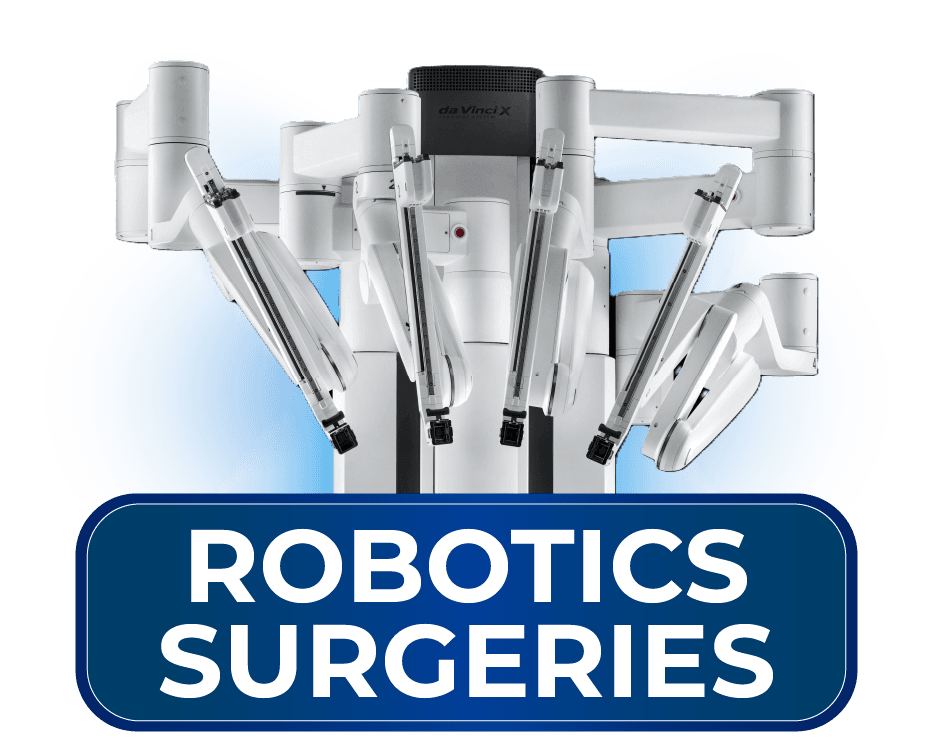
- Small cuts are made to insert robotic tools
- The surgeon controls the robot
- The prostate is removed and the urinary passage is rejoined
- A temporary urine tube (catheter) is placed
Risks & Complications
Common (Temporary)
- Urine leakage
- Difficulty in getting erections
- Mild bleeding or infection
Rare
- Blood clots or injury to nearby organs
Recovery Depends on
Age, cancer stage, other existing health problems and surgeon's experience.
Benefits and Outcomes
- Better cancer control
- More than 90% cure rate in early stage
- Less blood loss, smaller cuts
- Faster recovery
Quality of Life
- Less worry about cancer
- Slow improvement in urine control
- Better return to normal daily activities
Hospital Stay & Recovery
During Hospital Stay
- Stay: 1–3 days
- Monitoring of urine, pain and vitals
- Early walking encouraged to improve recovery
Post-Surgery
- Temporary urine tube (catheter): 7–10 days
- Recovery: 2–6 weeks
Follow-up
Prostate marker (PSA) levels in the blood after 6 weeks, then regular monitoring.
Care at Home
- Keep wound clean
- Do pelvic/bladder control (Kegel) exercises
- Avoid heavy lifting
Lifestyle & Prevention
- Balanced diet and hydration
- Regular walking
- Follow-up prostate marker tests
Myths vs Facts
Robot does the radical prostatectomy surgery alone.
Surgeon controls every step of the radical prostatectomy procedure.
Radical prostatectomy may lead to permanent sexual problems.
Sexual function improves over time post-surgery.
Robotic procedures lengthen the time for recovery.
Recovery is fastest, often within weeks following radical prostatectomy.
Frequently Asked Questions
Will this surgery cure my prostate cancer?
If found early, surgery can cure prostate cancer in many cases. Your doctor will also keep checking your prostate blood test (PSA) after surgery.
How long will I take to recover?
Most patients recover within 2–6 weeks, although this can vary depending on overall health and healing.
Will I need a catheter after surgery?
A temporary urine tube (catheter) is placed after surgery and is usually removed in 7–10 days.
Will I have urine leakage or sexual problems?
Some patients may experience temporary urine leakage or changes in sexual function, but these often improve over time with recovery and proper care.
When should I contact my doctor after surgery?
Contact your doctor if you have fever, heavy bleeding, severe pain, or difficulty passing urine.