STERLING INSTITUTE OF REHAB & PHYSIOTHERAPY

Rehabilitation Technology at Sterling Hospitals

Technology That Supports Every Step of Recovery

True recovery is about more than healing a wound or leaving the hospital; it is about walking with confidence, rebuilding strength, and regaining your independence in everyday life. At Sterling Institute of Rehab & Physiotherapy, we bridge the gap between medical treatment and real-world function by pairing specialised clinical care with advanced rehabilitation technology.

From robotic gait trainers and anti-gravity systems that support early movement, to precision strength-testing and movement-analysis labs, our specialised platforms allow clinicians to tailor every session to your exact condition and track your progress objectively. Whether you are recovering from a stroke, joint replacement, spine surgery, sports injury, or prolonged illness, our technology ensures every step of your rehabilitation is purposeful, personalised, and built around your goals

Explore Technologies
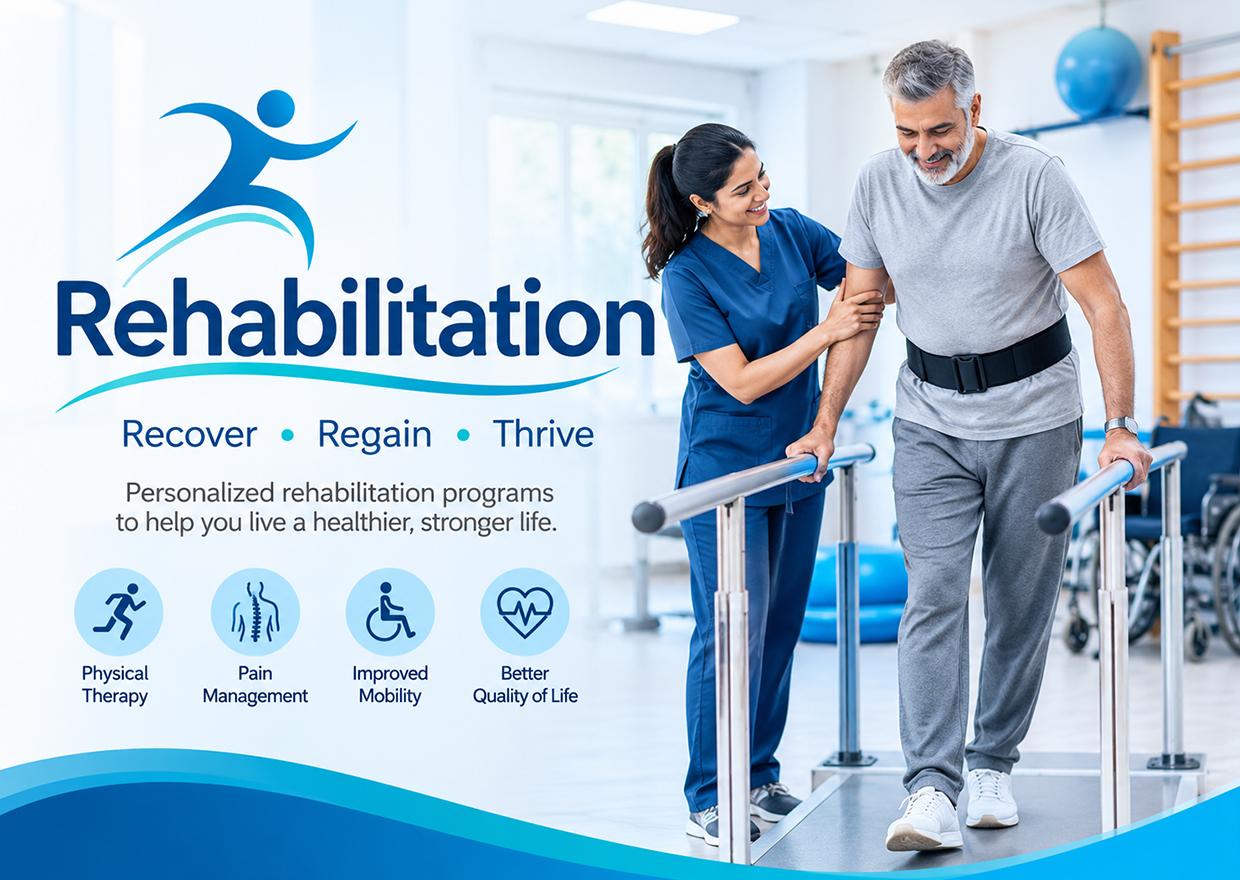
A patient practising walking between parallel bars with a physiotherapist at Sterling Hospitals
14Rehabilitation technology platforms
HOW IT HELPS

How Technology Supports Rehabilitation

Rehabilitation technology serves different purposes at various stages of therapy. From supporting repetitive movement practice and assisted exercises to assessing physical performance and tracking progress, these systems give physiotherapists precise ways to plan, guide, and personalise your recovery.

Repetitive Movement Practice

Robotic rehabilitation systems help patients perform controlled, task-specific movements repeatedly, supporting motor relearning and functional training.

Assistance During Movement Training

Systems with adjustable assistance and body-weight support allow selected patients to practise standing, walking and limb movements with appropriate support, depending on their functional abilities.

Objective Assessment of Movement and Strength

Movement analysis and strength-testing systems provide measurable information about walking patterns, muscle strength, symmetry and functional performance. These findings help physiotherapists plan and adjust treatment.

Feedback and Progress Tracking

Selected systems, such as the Lokomat®, provide real-time feedback during exercises. Assessment tools also help physiotherapists track changes in movement and performance over the course of rehabilitation.

OUR PLATFORMS

Technology That Measures, Guides, and Accelerates Recovery

Sterling Institute of Rehab & Physiotherapy brings together specialised technology platforms to support different rehabilitation requirements. These include robotic gait training systems, movement assessment equipment, strength-training platforms, limb rehabilitation robots and advanced therapeutic technologies.

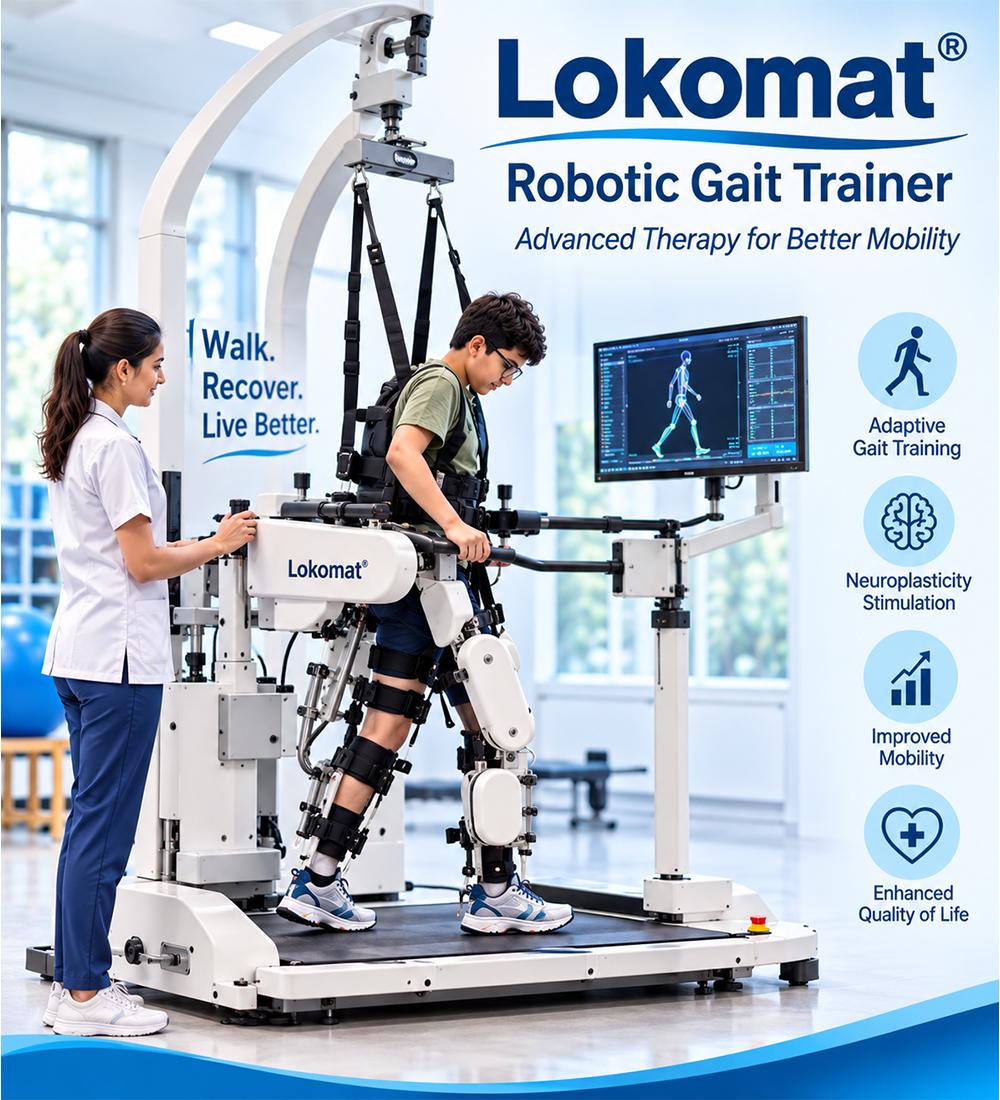
Lokomat® Robotic Gait Trainer01

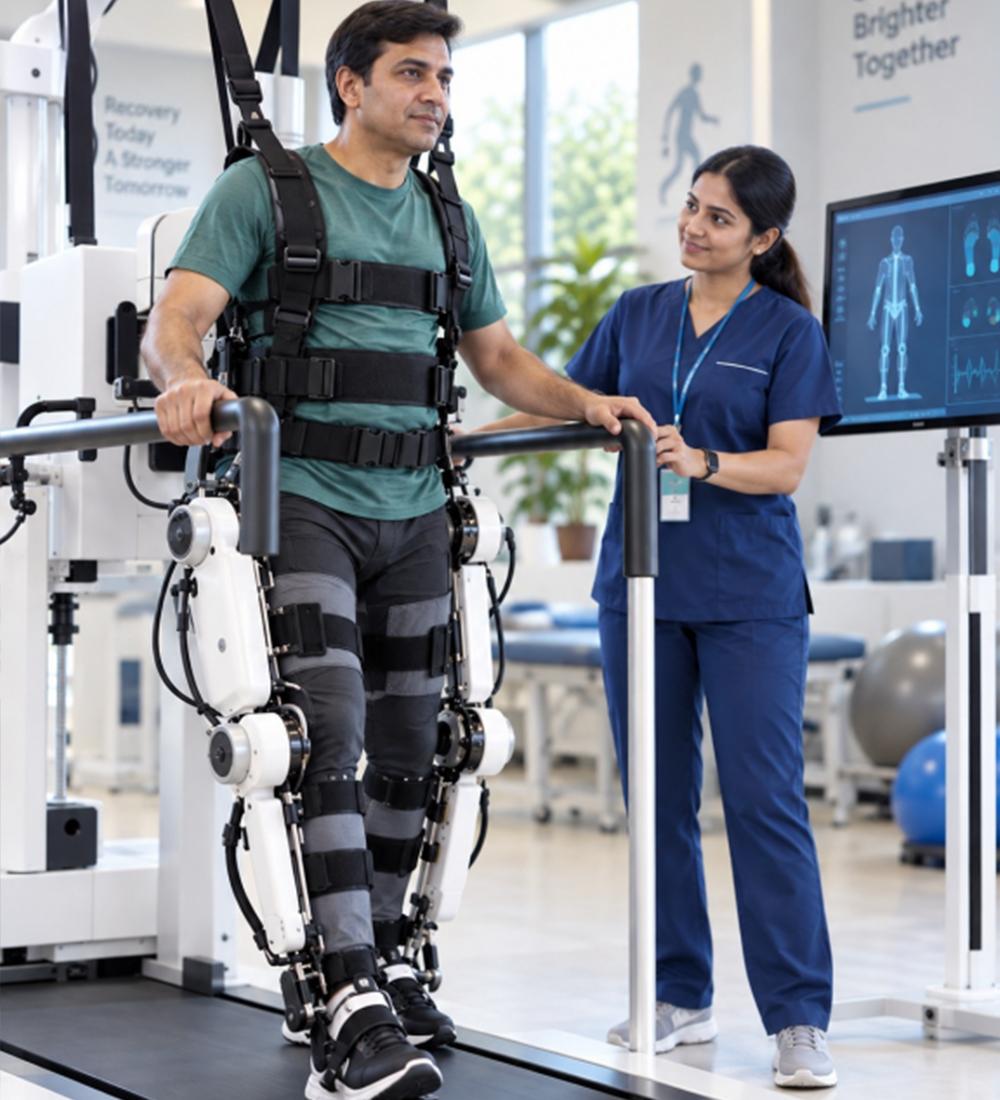
1. Lokomat® Robotic Gait Trainer

Robotic-assisted walking and gait rehabilitation

Relearning how to walk after a neurological condition or injury can require extensive guided practice. The Lokomat® Robotic Gait Trainer combines a robotic gait orthosis with treadmill training and dynamic body-weight support to facilitate repetitive walking movements.

The system guides the patient's legs through controlled stepping patterns, with adjustable hip and knee movement and assistance according to functional ability. Dynamic body-weight support reduces the physical load on your legs, allowing you to practise walking safely for longer periods.

Designed to support:

  • Stroke rehabilitation
  • Spinal cord injury rehabilitation
  • Neurological conditions affecting walking
  • Lower-limb motor rehabilitation
  • Selected paediatric rehabilitation

Role in rehabilitation: Facilitates repetitive, guided walking practice and helps patients work towards improving lower-limb movement and gait function.
Erigo® Robotic Trainer02

2. Erigo® Robotic Trainer

Early mobilisation and gradual verticalisation

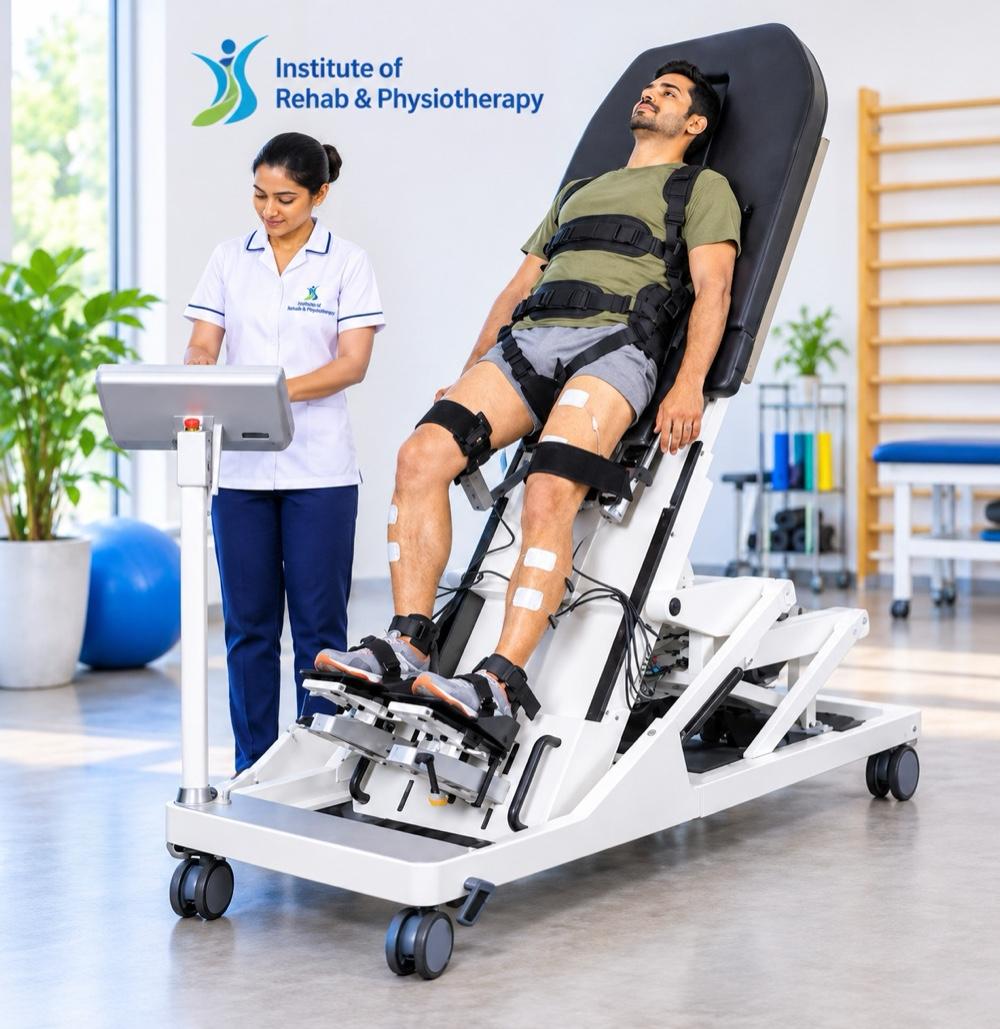
Patients recovering from a stroke, spinal cord injury, critical illness or major surgery may initially have difficulty sitting upright, standing or moving their legs. The Erigo® Robotic Trainer supports early mobilisation through gradual verticalisation combined with rhythmic, guided leg movements.

The system progressively tilts the patient from a lying position towards an upright posture while providing controlled stepping movements and sensorimotor stimulation. This approach helps introduce movement and upright positioning during the early stages of rehabilitation, particularly for patients with significant mobility limitations.

Designed to support:

  • Stroke rehabilitation
  • Spinal cord injury
  • Severe mobility impairment
  • Early mobilisation following critical illness or intensive care
  • Trauma and transitional rehabilitation

Role in rehabilitation: Supports early mobilisation through controlled changes in body position and guided leg movements when independent standing or walking is not yet possible.

Spine Lab03

3. Spine Lab

Technology-assisted spinal movement assessment

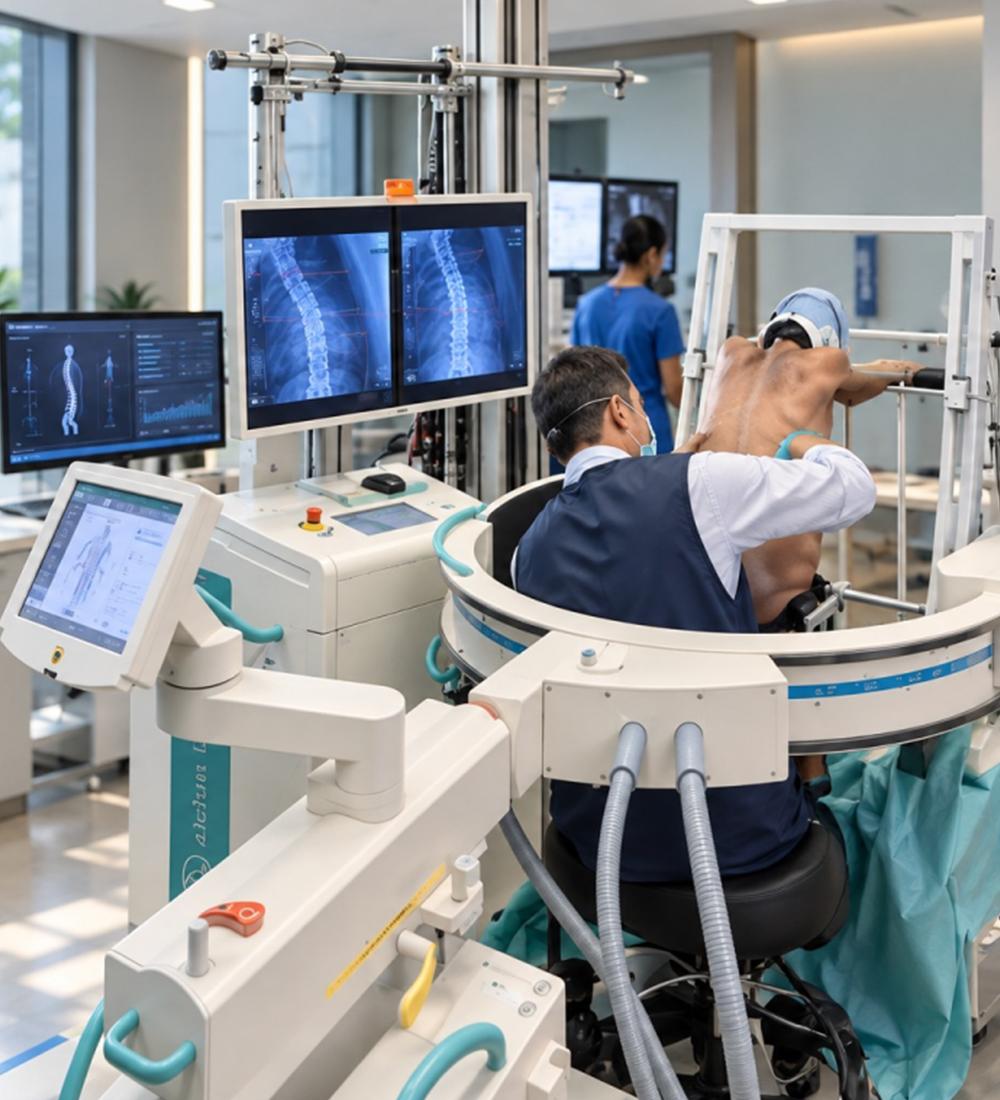
Understanding how the spine moves is an important part of planning rehabilitation for selected back and spinal conditions. The Spine Lab uses advanced movement analysis to assess spinal mobility and identify movement-related limitations that may contribute to pain or functional difficulties.

The assessment findings help physiotherapists understand spinal movement patterns and plan a rehabilitation programme focused on improving movement, strength and function.

Designed to support:

  • Chronic back pain
  • Spinal injuries
  • Recovery following spine surgery
  • Spinal movement and functional assessment

Role in rehabilitation: Helps establish a baseline understanding of spinal movement and informs the development of an individualised rehabilitation plan.

Gait Lab04

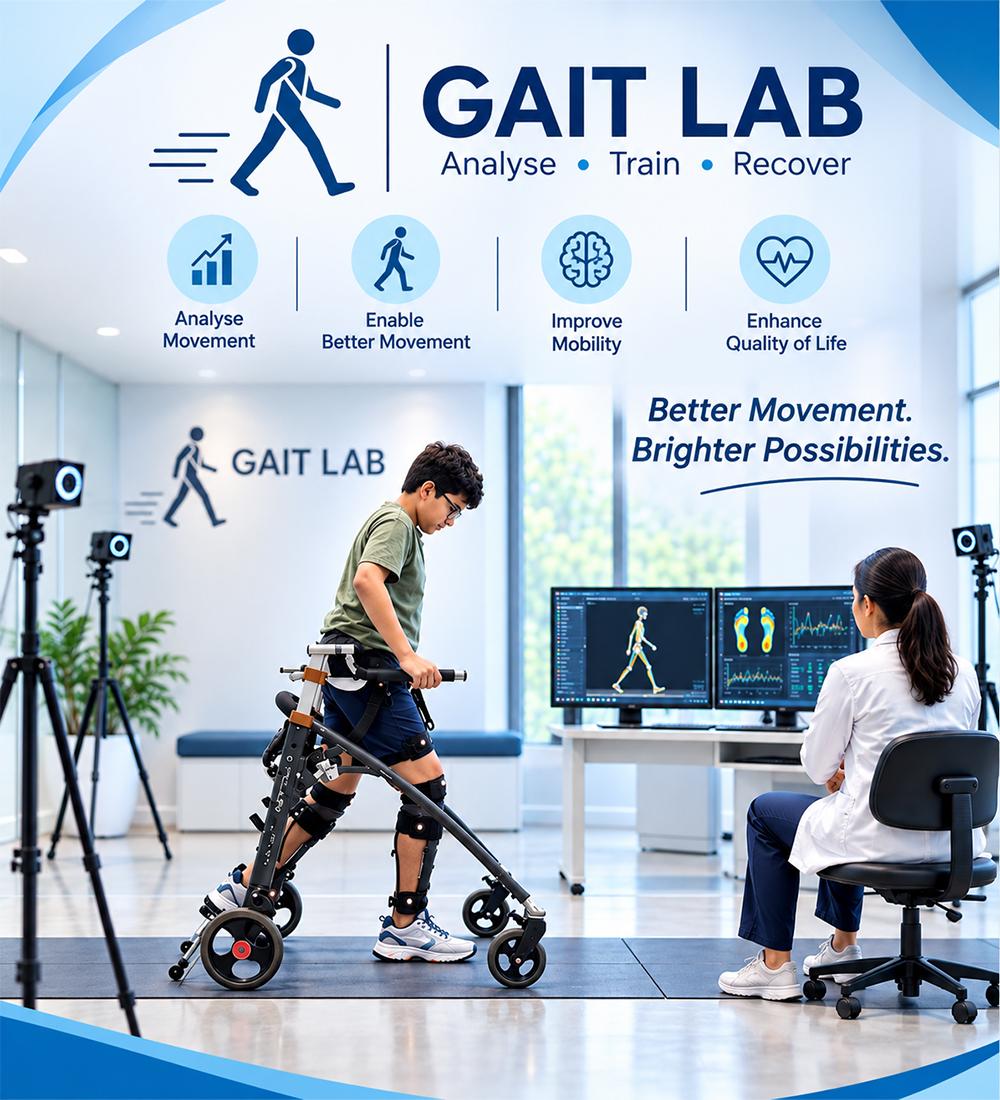
4. Gait Lab

Technology-enabled walking and movement analysis

Walking involves coordinated movements, balance and the ability to distribute weight between both legs. The Gait Lab enables clinicians to assess how a patient walks by examining movement patterns, symmetry, balance and other functional parameters.

The findings provide objective information about walking difficulties and help physiotherapists plan appropriate interventions. Repeated assessments can also help evaluate changes in walking patterns as rehabilitation progresses.

Designed to support:

  • Stroke rehabilitation
  • Neurological conditions affecting walking
  • Orthopaedic rehabilitation
  • Paediatric gait disorders
  • Post-surgical recovery
  • Balance and mobility assessment

Role in rehabilitation: Helps identify abnormalities in walking patterns and provides measurable information for treatment planning and progress assessment.

HUMAC NORM® Isokinetic System05

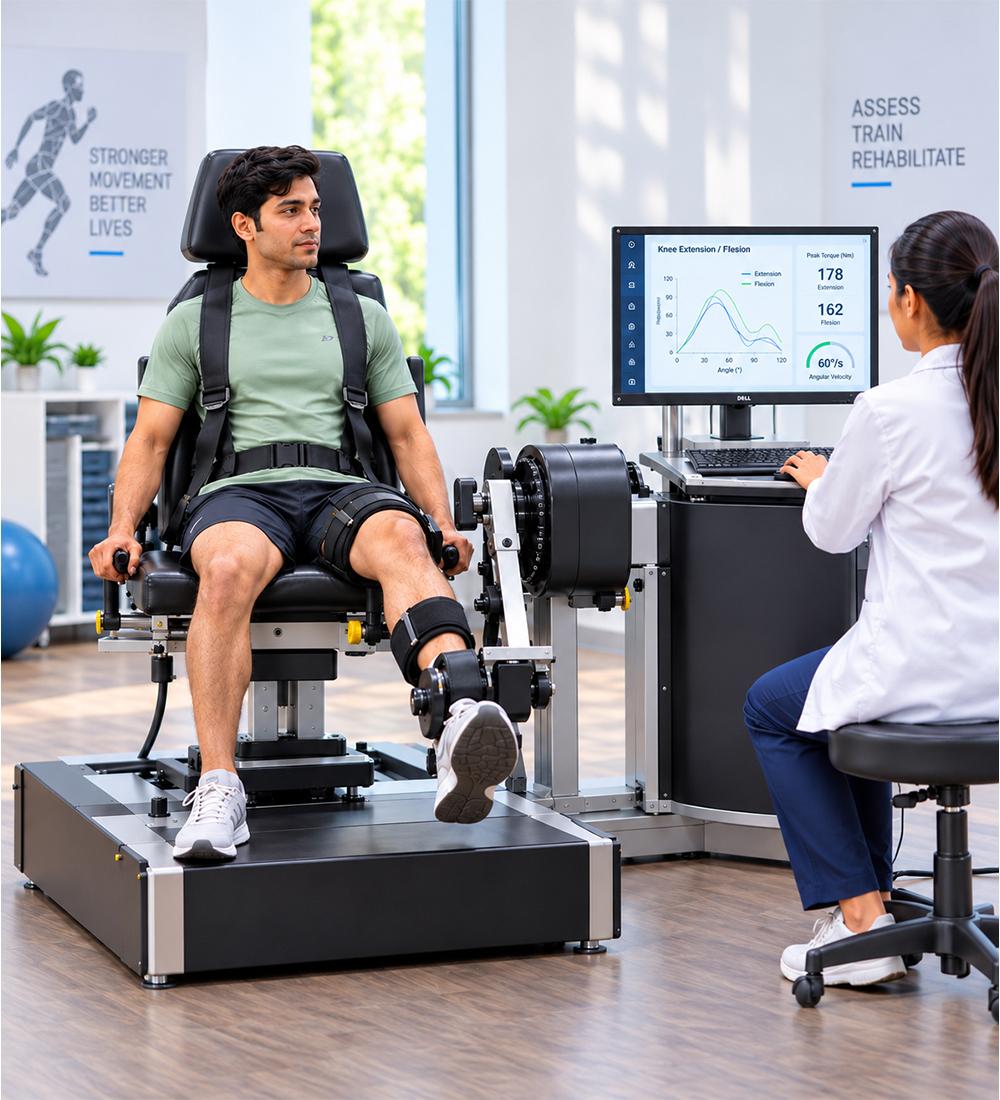
5. HUMAC NORM® Isokinetic System

Objective muscle strength assessment and training

Muscle strength and balance play an important role in mobility, joint function and physical performance. The HUMAC NORM® Isokinetic System is a specialised dynamometer that measures muscle strength while controlling the speed of movement.

It enables controlled strength assessment and exercise across different joints and movement patterns. The system helps identify muscle weakness and differences in strength between the two sides of the body, allowing physiotherapists to plan progressive strengthening exercises.

Designed to support:

  • Bone and muscle injuries
  • Sports rehabilitation
  • Joint rehabilitation
  • Recovery following orthopaedic surgery
  • Functional strengthening

Role in rehabilitation: Provides measurable strength assessments and controlled resistance training to help rebuild muscle strength and support functional recovery.

Spine Force06

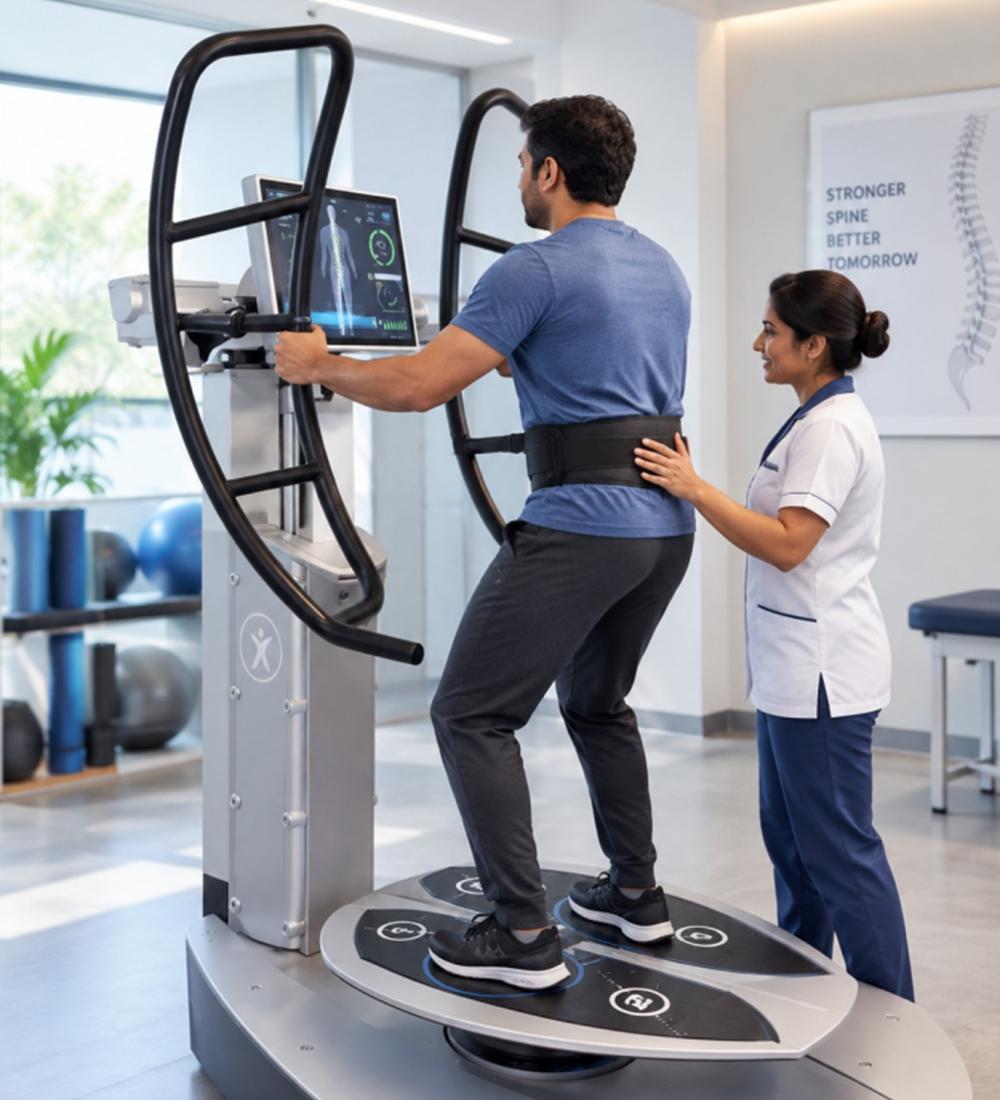
6. Spine Force

Technology-assisted spinal strengthening

The muscles around the abdomen, back and pelvis play an important role in supporting the spine and maintaining posture. Spine Force is a technology-assisted rehabilitation system designed to strengthen these supporting muscles through controlled and progressive exercises.

The training programme focuses on improving core strength, postural control and functional conditioning. Exercises can be progressed according to individual abilities and rehabilitation goals.

Designed to support:

  • Back rehabilitation
  • Weakness of muscles supporting the spine
  • Core strengthening
  • Postural conditioning
  • Chronic musculoskeletal conditions

Role in rehabilitation: Helps strengthen the muscles supporting the spine and improve core control, posture and functional movement.

Hydrotherapy07

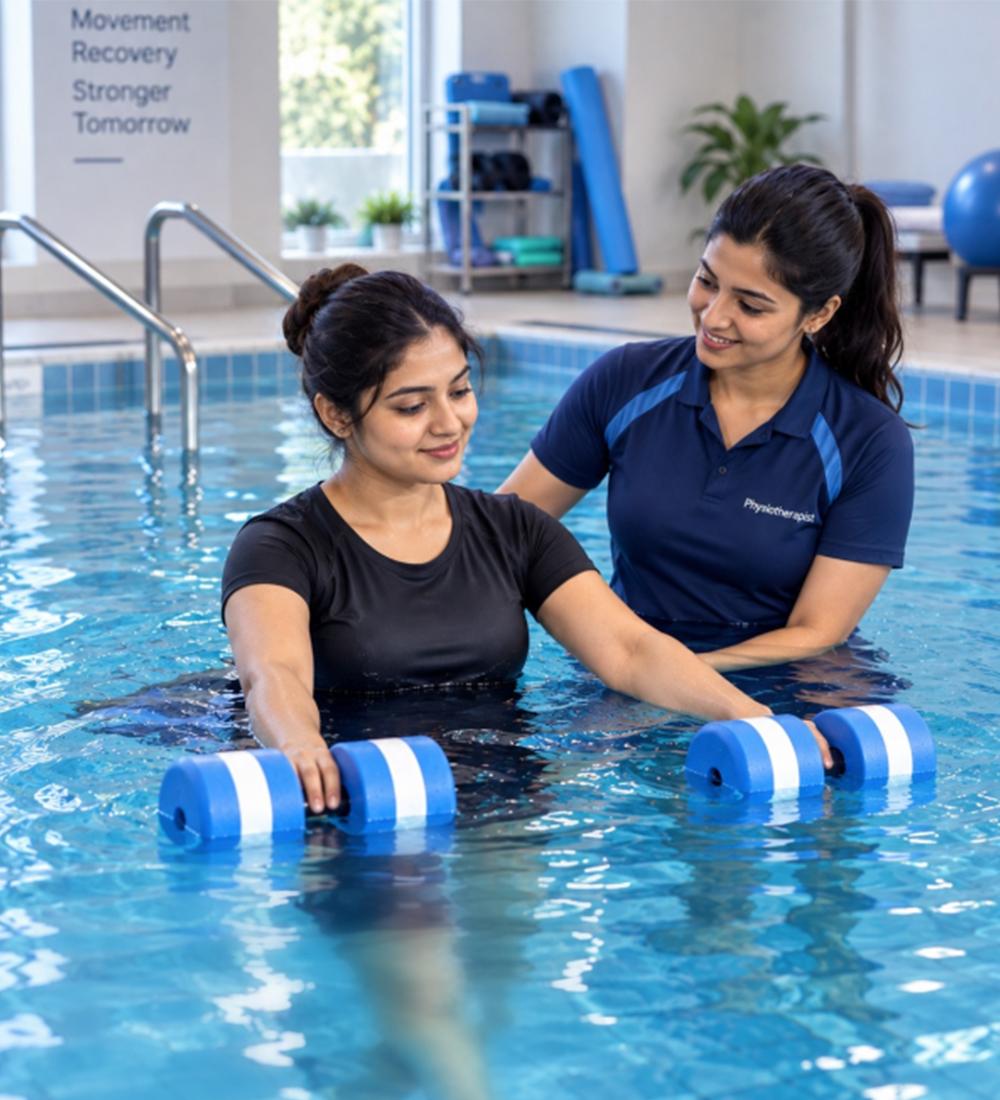
7. Hydrotherapy

Water-based rehabilitation

Hydrotherapy uses the physical properties of water to create a supportive environment for therapeutic exercises. The buoyancy of water reduces the load placed on joints, while its natural resistance gently strengthens muscles through controlled movement.

The warmth of the water can also make certain movements easier for patients who find land-based exercises difficult. Hydrotherapy is incorporated into rehabilitation programmes when clinically appropriate.

Designed to support:

  • Orthopaedic rehabilitation
  • Neurological rehabilitation
  • Bone and muscle injuries
  • Paediatric rehabilitation
  • Post-operative recovery
  • Mobility and functional training

Role in rehabilitation: Allows patients to practise movements and perform strengthening exercises in a supportive aquatic environment with reduced loading on joints.

Upper-Limb Rehabilitation Robot08

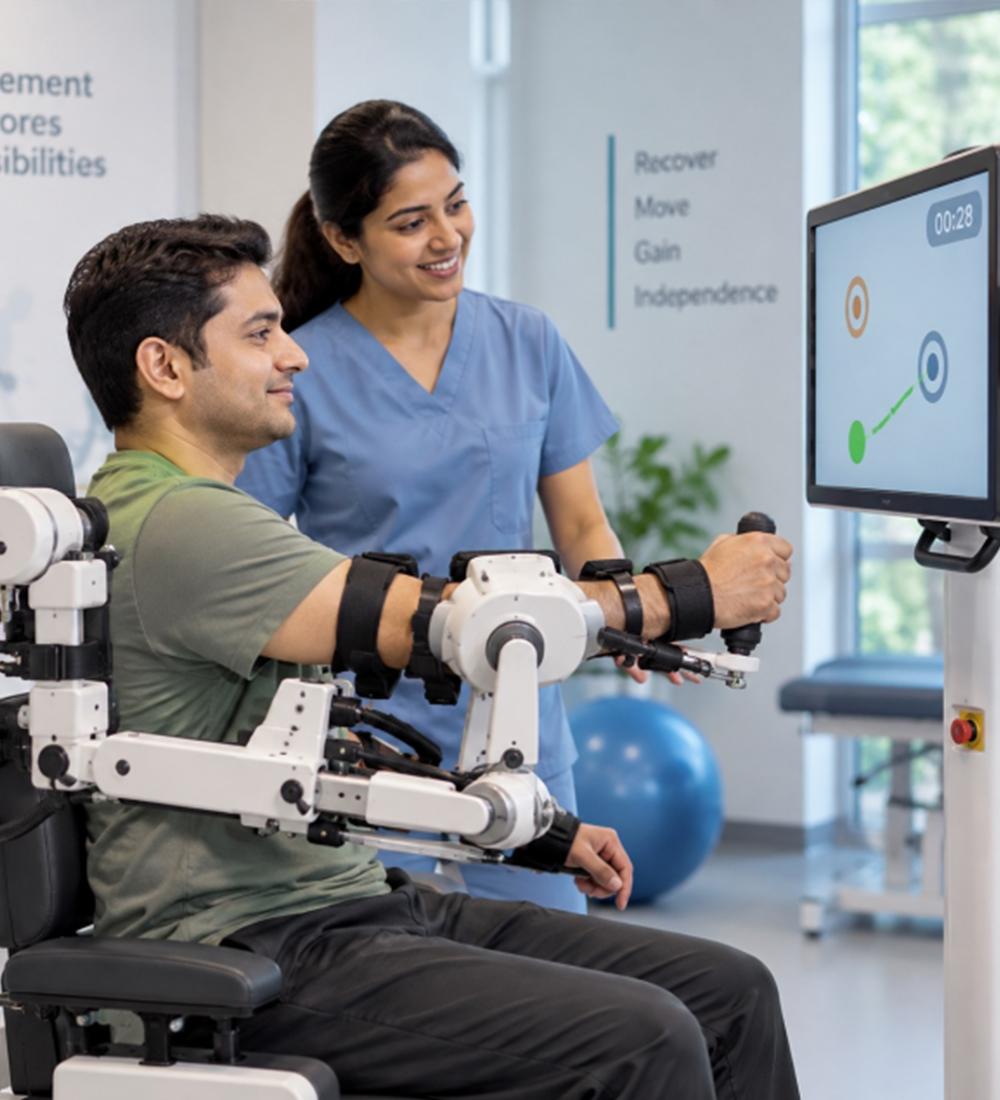
8. Upper-Limb Rehabilitation Robot

Robotic-assisted arm movement training

Arm weakness and impaired coordination can affect everyday activities such as reaching, lifting, holding objects and performing personal care tasks. The Upper-Limb Rehabilitation Robot provides controlled, repetitive assistance for arm exercises, with the level of support adapted to the patient's functional ability.

The system facilitates task-focused movement practice, helping patients work on arm strength, coordination and motor control during rehabilitation.

Designed to support:

  • Stroke rehabilitation
  • Neurological recovery
  • Upper-limb weakness
  • Motor control training
  • Functional movement rehabilitation

Role in rehabilitation: Facilitates repetitive arm movements to support motor relearning, coordination and functional use of the upper limb.

Lower-Limb Rehabilitation Robot09

9. Lower-Limb Rehabilitation Robot

Robotic-assisted leg movement training

Lower-limb weakness following a stroke, accident or surgery can affect standing, walking and everyday mobility. The Lower-Limb Rehabilitation Robot facilitates controlled and repetitive leg movements to support strength, coordination and motor function.

The level of robotic assistance can be adjusted according to the patient's abilities, allowing training to progress from assisted movements towards more independent movement as functional capacity improves.

Designed to support:

  • Stroke rehabilitation
  • Neurological rehabilitation
  • Lower-limb weakness
  • Mobility impairment
  • Post-operative rehabilitation

Role in rehabilitation: Supports repetitive leg movement training to help patients rebuild lower-limb strength, coordination and functional mobility.

Hand Rehabilitation Robot10

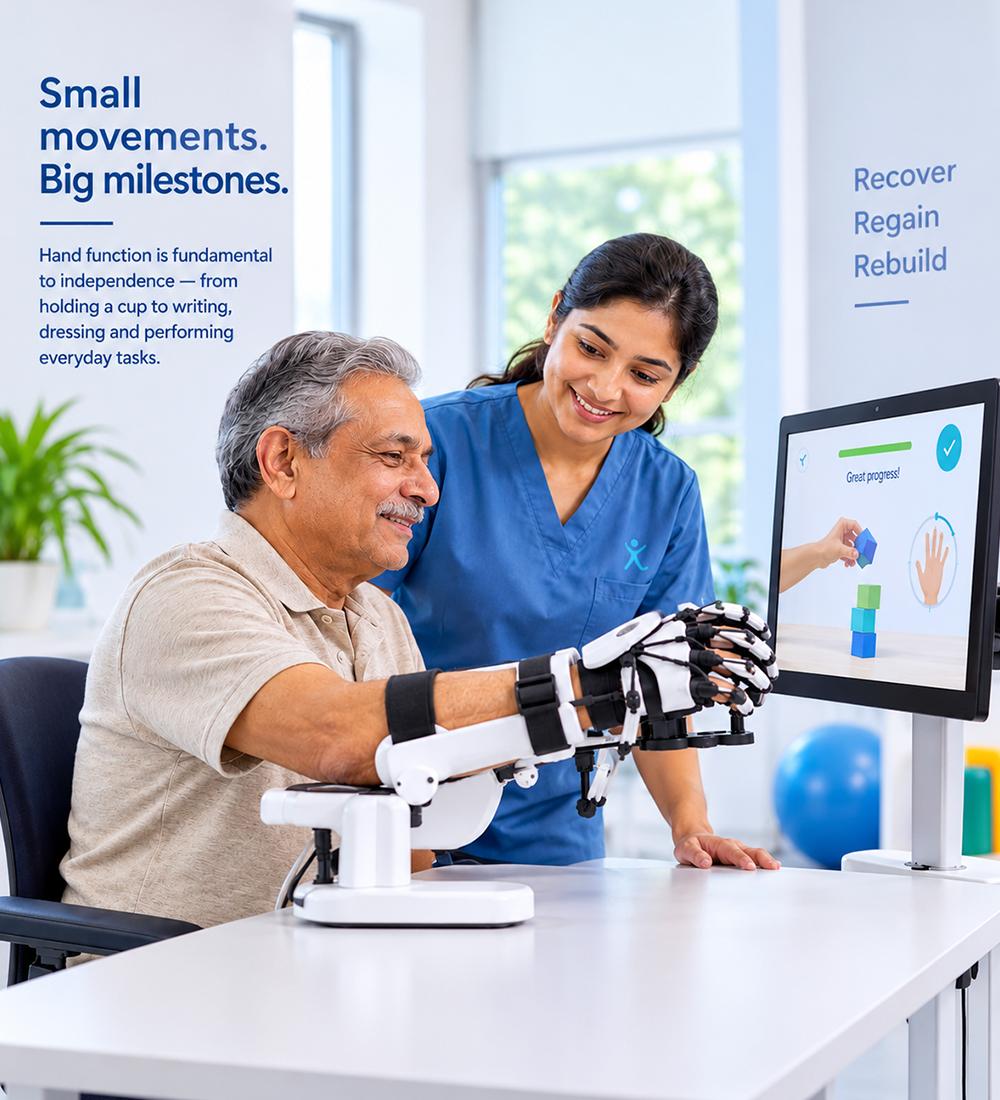
10. Hand Rehabilitation Robot

Robotic hand and finger therapy

Hand and finger movements are essential for many everyday activities, including holding a cup, writing, dressing and handling objects. Weakness or impaired coordination following a stroke or hand injury can make these activities difficult.

The Hand Rehabilitation Robot facilitates repetitive, controlled training of the wrist, hand and fingers. This allows patients to practise specific movements as part of a programme aimed at improving hand mobility and function.

Designed to support:

  • Stroke rehabilitation
  • Neurological conditions
  • Hand weakness
  • Motor retraining
  • Functional hand recovery

Role in rehabilitation: Helps patients practise controlled hand and finger movements to work towards regaining the functional abilities required for everyday activities.

Electromyopulse11

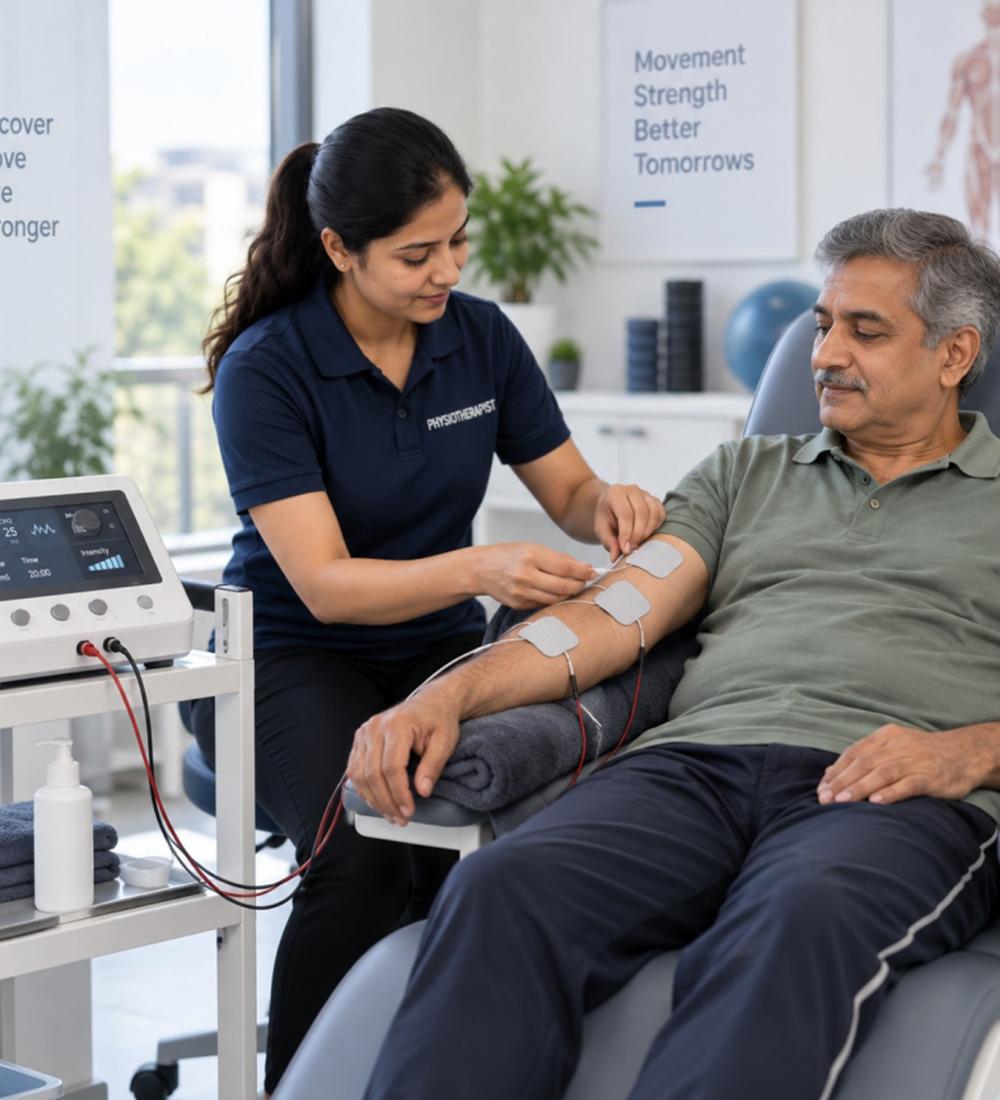
11. Electromyopulse

Advanced electrotherapy for muscle activation

Muscle weakness can develop following a neurological condition, injury, surgery or prolonged immobility. Electromyopulse uses carefully controlled electrical impulses to stimulate nerves and muscles, helping activate weak or underused muscles.

The therapy can support muscle activation, strength development and circulation while helping ease stiffness. It is used as part of a broader rehabilitation programme and is selected according to clinical assessment and therapist prescription.

Designed to support:

  • Stroke and neurological conditions
  • Muscle weakness
  • Orthopaedic injuries
  • Recovery following surgery
  • Prolonged immobilisation

Role in rehabilitation: Complements active physiotherapy by providing controlled electrical stimulation to selected muscles.

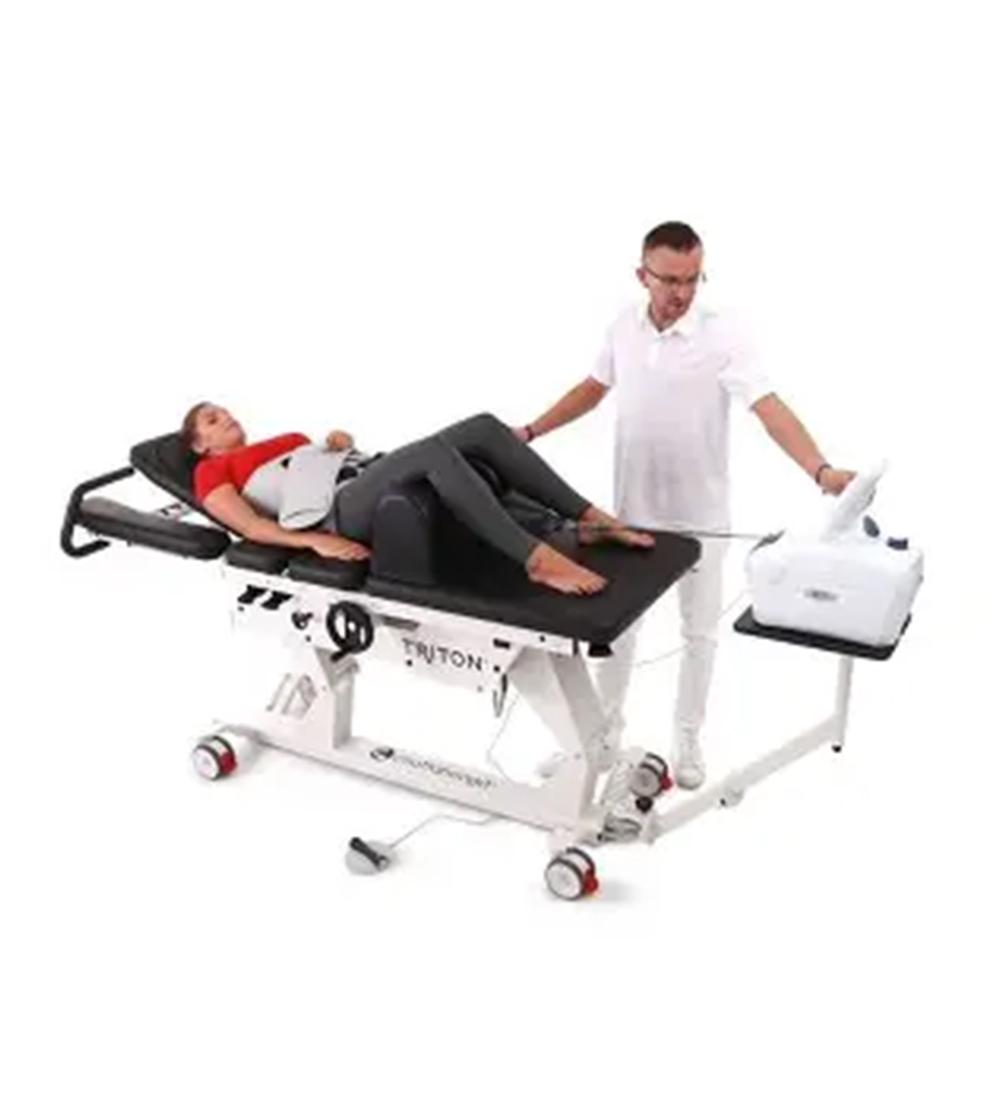
Triton® Spinal Traction and Decompression12

12. Triton® Spinal Traction and Decompression

Controlled mechanical traction for selected spinal conditions

Certain neck and back conditions may involve pressure on spinal structures and symptoms such as pain, tingling, numbness or weakness extending into the arms or legs. The Triton® Spinal Traction and Decompression system provides controlled mechanical traction to gently stretch the spine.

Treatment settings are precisely tailored to each patient's clinical needs for targeted neck (cervical) and lower-back (lumbar) rehabilitation.

Designed to support:

  • Selected mechanical neck pain conditions
  • Selected lower-back pain conditions
  • Radicular symptoms, including pain, tingling or numbness travelling into an arm or leg
  • Spinal rehabilitation
  • Musculoskeletal rehabilitation

Role in rehabilitation: Provides controlled traction as part of selected rehabilitation programmes to support spinal movement and manage symptoms.

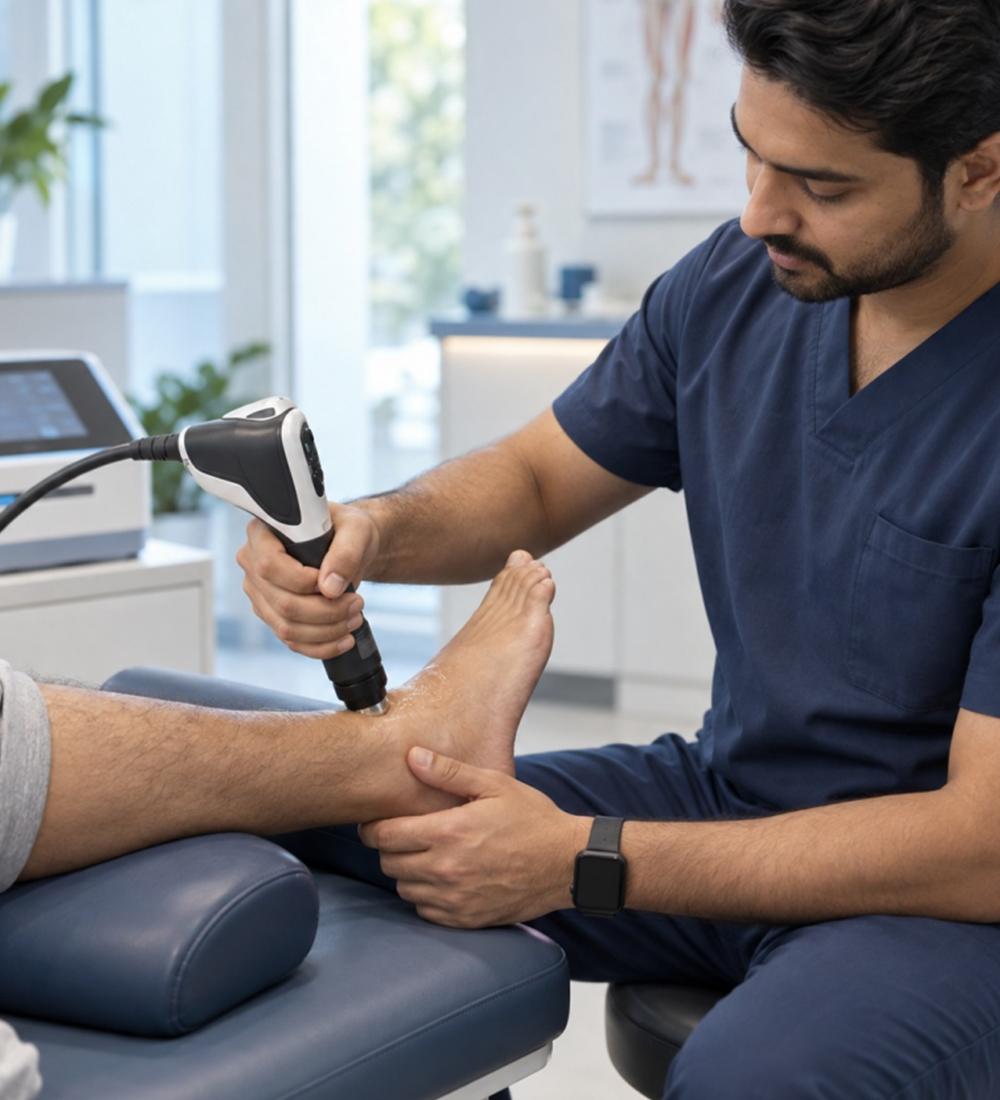
Storz Medical® Shock Wave Therapy13

13. Storz Medical® Shock Wave Therapy

Extracorporeal shock wave therapy for musculoskeletal rehabilitation

Storz Medical® Shock Wave Therapy uses controlled acoustic pulses, known as shock waves, directed precisely at injured tissue. This non-invasive therapy is used in musculoskeletal rehabilitation to stimulate healing and relieve pain in tendon and soft-tissue injuries.

The system offers focused or radial shock wave options, depending on the clinical requirements and treatment plan.

Designed to support:

  • Selected tendon disorders
  • Sports injuries
  • Musculoskeletal conditions
  • Soft-tissue injuries and rehabilitation

Role in rehabilitation: Provides targeted shock wave therapy as part of a comprehensive rehabilitation plan for selected tendon and soft-tissue conditions.

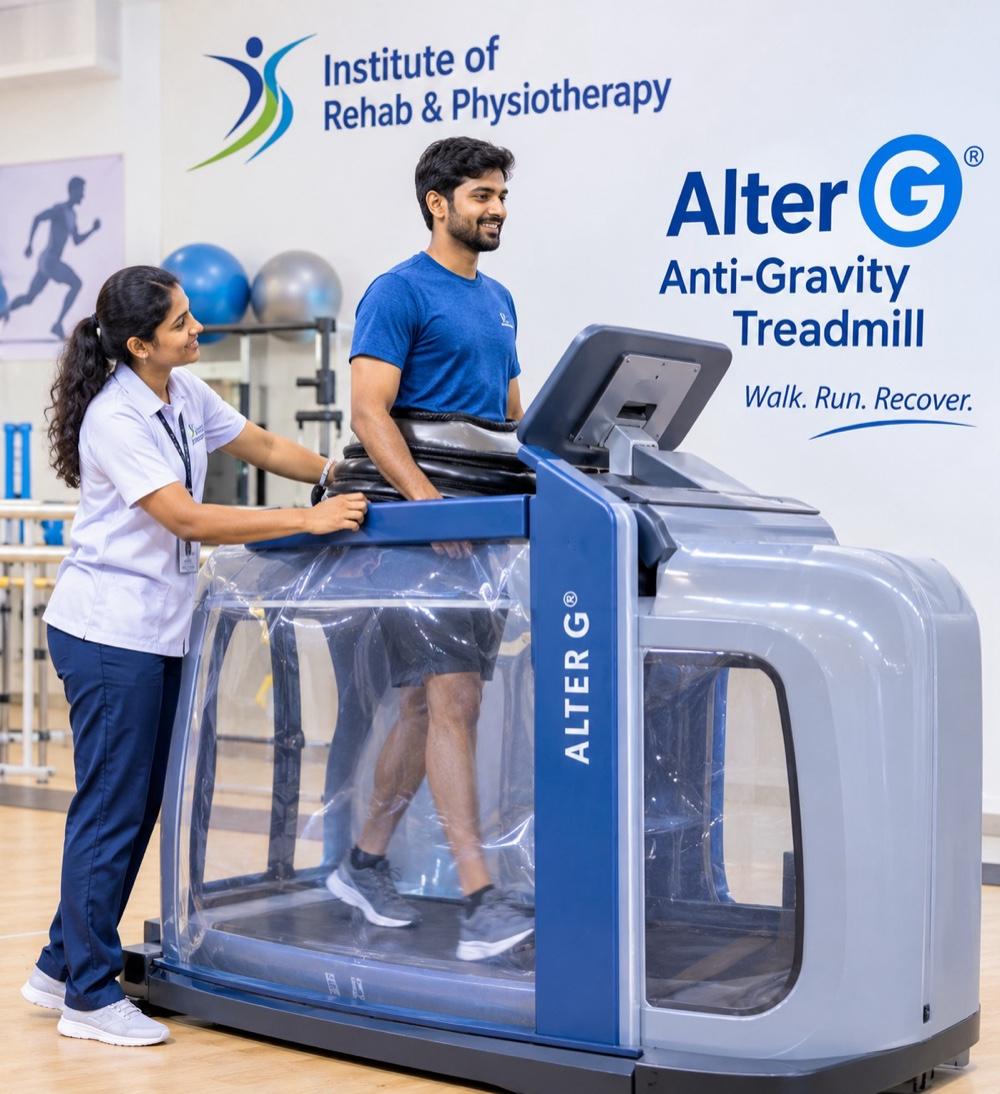
AlterG® Anti-Gravity Treadmill14

14. AlterG® Anti-Gravity Treadmill

Walking and running with reduced body-weight support Recovering from a lower-limb injury or surgery often involves the challenge of rebuilding strength and confidence while protecting healing tissue. The AlterG® Anti-Gravity Treadmill uses patented Differential Air Pressure technology, inspired by NASA, to gently lift and support the body during walking or running.

The system can reduce the weight borne by the patient by up to 80 percent, with adjustments in precise 1 percent increments. This allows patients to practise movement with less load on healing joints and muscles, before gradually progressing towards full body weight as strength improves.

Designed to support:

  • Recovery after orthopaedic injury or surgery
  • Sports injuries and return to running
  • Neurological conditions and gait training
  • Strength and endurance in chronic conditions
  • Weight management

Role in rehabilitation: Provides precise, unweighted support for walking and running, allowing patients to move earlier with less impact on healing joints and muscles.

PROGRESS TRACKING

Measuring Recovery Through Objective Assessments

Rehabilitation is an ongoing process, and progress involves more than the number of sessions completed. Tracking changes in muscle strength, walking patterns, balance, and daily function gives both you and your care team clear proof of your recovery.

At Sterling Institute of Rehab & Physiotherapy, progress is evaluated through structured assessments at different stages of the rehabilitation programme.

  • 1Baseline assessment:
    Establishes the patient's initial functional abilities, including movement, strength, gait and other relevant parameters.
  • 2Interim assessment:
    Evaluates changes during the programme and helps identify areas requiring further attention.
  • 3Post-intervention assessment:
    Reviews functional changes following the prescribed rehabilitation programme and compares them with the initial findings.

Technology platforms such as the Gait Lab and HUMAC NORM® provide objective information that can support these assessments. The findings help physiotherapists review progress and modify rehabilitation goals and interventions when required.

Start Your Rehabilitation Journey

Book an assessment with our rehabilitation team to find the programme that suits your needs.

FAQs

Frequently Asked Questions

1. What is technology-assisted rehabilitation?

Technology-assisted rehabilitation integrates specialised systems and equipment, such as robotic devices, movement-analysis labs, isokinetic machinery, hydrotherapy, and electrotherapy platforms, with traditional physiotherapy. These tools help therapists guide movements, deliver high-repetition exercises, and track functional progress.

2. How does robotic rehabilitation help patients?

Robotic rehabilitation systems provide controlled assistance for repetitive, task-specific movements. Depending on the equipment, they may support walking practice, arm and leg movements or hand and finger exercises. These systems are used alongside physiotherapy to support motor relearning and functional training.

3. Is technology-assisted rehabilitation suitable for everyone?

Technology-assisted rehabilitation can be considered for patients with a wide range of conditions. However, the choice of equipment and exercises depends on the patient's condition, functional abilities, clinical assessment and rehabilitation goals. A physiotherapist evaluates these factors to determine which technologies may be appropriate as part of the rehabilitation programme.

4. Can rehabilitation technology help after a stroke?

Yes, targeted technology plays a vital role in stroke recovery. Systems like the Erigo, Lokomat, and upper/lower limb or hand rehabilitation robots facilitate guided movement and stepping training, while tools like Electromyopulse help activate and stimulate recovering muscles.

5. What technology is used for walking rehabilitation?

Walking rehabilitation often incorporates advanced platforms such as the Lokomat Robotic Gait Trainer, the Erigo Robotic Trainer, and dedicated Gait Labs. These systems enable safe early mobilisation, guided stepping practice, and objective assessments of posture, balance, and movement patterns.

6. What is the role of the Gait Lab in rehabilitation?

The Gait Lab helps assess walking patterns, movement symmetry, balance and other functional parameters. The findings assist physiotherapists in identifying walking difficulties, planning rehabilitation and monitoring changes over time.

7. What is hydrotherapy, and who may benefit from it?

Hydrotherapy is a form of water-based rehabilitation that uses buoyancy, resistance and warmth to support therapeutic movement. It may be considered for selected patients undergoing orthopaedic, neurological, musculoskeletal and paediatric rehabilitation, as well as post-operative recovery.

8. Does rehabilitation technology replace conventional physiotherapy?

No. Rehabilitation technology complements conventional physiotherapy and hands-on treatment. Physiotherapists assess patients, prescribe appropriate exercises, select suitable equipment and monitor progress throughout the programme.

9. How is progress measured during technology-assisted rehabilitation?

Progress may be evaluated through baseline, interim and post-intervention assessments. Parameters such as muscle strength, walking patterns, balance, movement and functional abilities are reviewed to understand changes and guide further rehabilitation.

10. Can rehabilitation continue after hospital discharge?

Yes. Rehabilitation can continue through outpatient programmes and Home Care Services. Depending on individual requirements, home-based physiotherapy, mobility training, functional exercises and caregiver guidance may be included in the ongoing recovery plan.

Robotics Surgeries
Doctors
Book Appt
Health Checks
Call Us