

Frozen shoulder, also called adhesive capsulitis, is a condition in which the shoulder becomes painful, stiff, and difficult to move. It happens when the tissue around the shoulder joint becomes thick and tight, making movement difficult.
Overview
What is Frozen Shoulder?
Frozen shoulder, also called adhesive capsulitis, is a condition in which the shoulder becomes painful, stiff, and difficult to move. It happens when the tissue around the shoulder joint becomes thick and tight, making movement difficult.
Frozen shoulder usually develops slowly and commonly passes through three stages:
- Freezing stage: Shoulder pain starts and movement becomes limited
- Frozen stage: Pain may reduce slightly, but stiffness becomes worse
- Thawing stage: Shoulder movement slowly improves
Frozen shoulder is important because it can affect work, sleep, daily routine, and quality of life for several months or even years if left untreated.
Who is commonly affected?
Frozen shoulder is more common in:
- People between 40 and 60 years of age
- Women
- People with diabetes, thyroid problems, heart disease, or Parkinson’s disease
- People recovering from shoulder injury or surgery
Why Does Frozen Shoulder Happen?
The shoulder is a “ball-and-socket” joint that normally moves freely in many directions. In frozen shoulder, the capsule (the covering around the joint) becomes inflamed and stiff. Over time, the shoulder may feel “stuck” or “frozen.” Frozen shoulder often develops when the shoulder is not moved for a long time.
Common causes and risk factors
- Shoulder injury or fracture
- Delaying treatment after shoulder injury
- Recovery after surgery
- Rotator cuff problems
- Long periods of arm or shoulder immobility
- Diabetes
- Thyroid disorders
- Increasing age
Early shoulder movement and physiotherapy after injury or surgery may help reduce the risk.
Signs and Symptoms
Frozen shoulder usually starts gradually.
Common symptoms
- Shoulder pain, especially during movement
- Stiffness in the shoulder
- Difficulty lifting the arm
- Trouble reaching behind the back
- Pain that worsens at night
- Difficulty sleeping on the affected side
- Reduced ability to perform daily activities
Warning signs that need medical attention
See a doctor if:
- Shoulder pain that does not improve
- Increasing stiffness or difficulty moving the shoulder
- Pain that affects sleep or daily activities
- Difficulty using the arm normally
These symptoms may suggest another shoulder condition that needs evaluation.
Diagnosis and Investigations
Doctors usually diagnose frozen shoulder based on symptoms and physical examination.
Clinical evaluation
The doctor may:
- Ask about pain and stiffness
- Check how far the shoulder can move
- Compare active movement (you move the shoulder yourself) and passive movement (doctor moves the shoulder)
In frozen shoulder, both types of movement are limited.
Tests and scans
Tests may be done to rule out other shoulder problems.
- X-ray: Helps rule out arthritis, fractures or other bone problems.
- MRI: MRI provides detailed images of soft tissues and may help identify other shoulder injuries.
- Ultrasound: Sometimes used to check tendons and surrounding structures.
Treatment Options
Most people improve with time and non-surgical treatment.
Medications
Doctors may recommend:
- Pain relievers such as paracetamol
- Anti-inflammatory medicines such as ibuprofen or naproxen
- Steroid injections into the shoulder joint to reduce pain and inflammation
Medicines should only be taken under medical advice.
Physiotherapy and exercises
Physiotherapy with regular stretching and gentle movement are important for recovery.
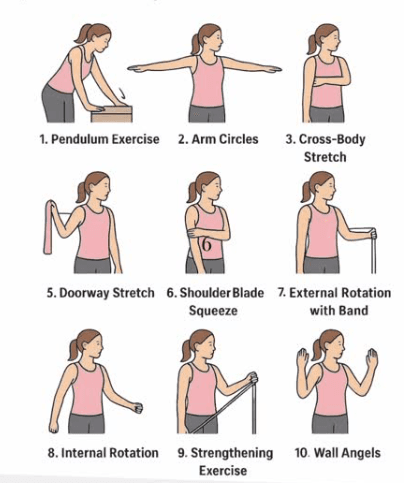
Exercises help:
- Improve shoulder movement
- Reduce stiffness
- Maintain flexibility
- Improve daily function
Lifestyle and self-care measures
- Keep the shoulder moving as much as possible
- Avoid complete rest for long periods
- Apply heat or cold packs for pain relief
- Follow exercise instructions regularly
Other non-surgical treatments
Some patients may benefit from:
- Hydrodilatation (fluid injection to stretch the joint capsule)
- TENS therapy (electrical nerve stimulation for pain relief)
When is surgery needed?
Surgery is rarely required. It may be considered if symptoms remain severe despite several months of treatment. Procedures may include:
- Manipulation under anesthesia (doctor gently moves the shoulder while you are asleep)
- Arthroscopic surgery (keyhole surgery to release tight tissue)
Recovery after surgery usually includes physiotherapy.
Myths and Facts
Frozen shoulder only happens after injury.
Many people develop frozen shoulder without any major injury. Diabetes and reduced shoulder movement are common risk factors.
Complete rest is the best treatment.
Gentle movement and physiotherapy are important for recovery. Keeping the shoulder completely still may worsen stiffness.
Frozen shoulder is permanent.
Most people improve over time, although recovery may take months to years.
Only older people get frozen shoulder.
Frozen shoulder is more common after age 40, but it can occur in younger adults too, especially after injury or surgery.
Frequently Asked Questions (FAQs)
Is frozen shoulder very painful?
Yes. Pain can range from mild to severe and is often worse at night.
How long does frozen shoulder last?
Recovery may take several months to 2–3 years depending on severity and treatment.
Can exercise help frozen shoulder?
Yes. Regular stretching and physiotherapy exercises are among the most effective treatments for improving movement and reducing stiffness.
Speak to an orthopaedic specialist
Get an expert opinion and a personalised treatment plan at Sterling Hospitals.


