Expertise
A distinguished cancer surgeon with extensive experience in complex oncology, trained in MBBS and MS General Surgery at Tata Memorial Hospital, Mumbai, with advanced certification in Surgical Oncology.
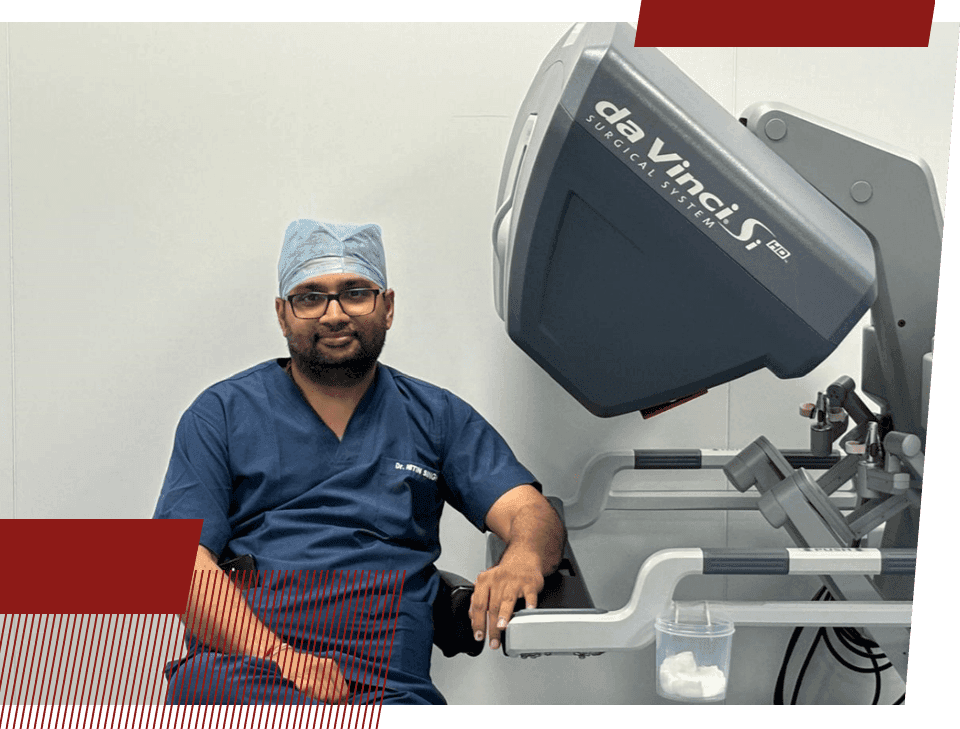
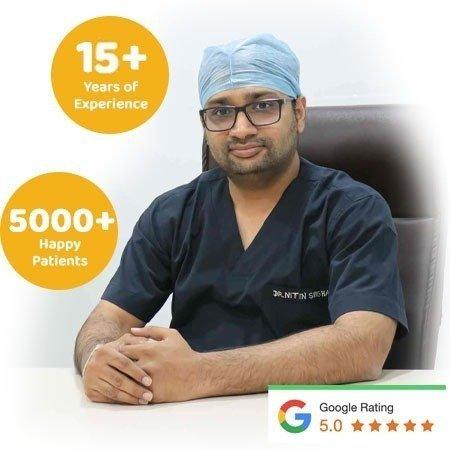
Dr Nitin Singhal is a surgical oncologist with over 15 years of experience in cancer care. Trained at Tata Memorial Hospital, Mumbai, he specialises in complex cancer surgery, robotic cancer surgery and HIPEC, across several cancer types.
At Sterling Hospitals he works with patients and families to understand the condition clearly, evaluate the available surgical options, and plan care around the needs of the individual patient.
Expert Cancer Care
Certified MCh Surgical Oncologist
15+ Years of Experience
Dr Nitin Singhal is a surgical oncologist with over 15 years of experience in cancer care. Trained at Tata Memorial Hospital, Mumbai, he specialises in complex cancer surgery, robotic cancer surgery and HIPEC, across several cancer types.
At Sterling Hospitals he works with patients and families to understand the condition clearly, evaluate the available surgical options, and plan care around the needs of the individual patient.
His practice covers gastrointestinal, gynaecological and colorectal oncology, with an evidence-based approach focused on precision, safety and faster recovery.
5000+
Patients treated
5.0
Google rating
Get in Touch
Or call 98 98 98 78 78 to book an appointment directly.
Why Choose Dr. Singhal
A distinguished cancer surgeon with extensive experience in complex oncology, trained in MBBS and MS General Surgery at Tata Memorial Hospital, Mumbai, with advanced certification in Surgical Oncology.
A meticulous approach to surgery, whether robotic or HIPEC, with expertise spanning gastrointestinal, urological and gynaecological malignancies, focused on precision and improved outcomes.
Among the surgeons who introduced and refined advanced robotic and HIPEC surgical techniques for cancer care in Ahmedabad.
Leads a multidisciplinary team of specialists who work closely together to plan comprehensive, personalised treatment for every patient.
Supported by modern robotic surgical systems, HIPEC treatment setups, advanced imaging, ICU and specialised radiology services.
Respected for a deep understanding of cancer treatment and a compassionate approach — patients trust him not only for surgical skill but for guidance through the full cancer journey.
Areas of Expertise
Dr. Singhal's surgical oncology practice spans several cancer types, with treatment planned around the individual condition.
Colorectal work includes sphincter-preserving approaches, with robotic surgery and HIPEC used where appropriate.
Robotic surgery and HIPEC may form part of the plan depending on the individual case.
Includes minimally invasive robotic surgery for selected urological cancers.
Treatment planned according to the individual condition.
Surgical management of cancers of the chest cavity.
Robotic Surgery
Less pain and blood loss
Fewer complications
Shorter hospital stay
Smaller scars
Advanced Cancer Surgery
The suitability of an advanced surgical approach depends on the individual cancer and the patient's clinical needs.
Robotic-assisted surgery across gastrointestinal, colorectal, gynaecological, urological and thoracic cancers. Whether a robotic approach suits a patient depends on the cancer and the surgical requirement.
An advanced approach for selected cancers in the abdominal cavity. Visible cancer is removed surgically, then heated chemotherapy is delivered directly inside the abdomen.
May be considered for
Complex or recurrent cancers can need a more specialised surgical approach because of the extent of disease or the structures involved. Dr Singhal has extensive experience managing these cases, with the plan set by the individual cancer and the patient's clinical needs.
Areas of Focus
Precision, minimally invasive surgery using the da Vinci robotic system.
Learn More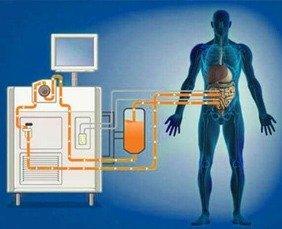
Heated chemotherapy delivered directly into the abdomen after surgical removal of visible cancer, for selected abdominal cancers.
Learn More
Multidisciplinary, evidence-based treatment planning across surgical, medical and radiation oncology.
Learn More47kg
Tumour removed
49kg
Patient's body weight
Documented case
In a rare procedure covered by national media, a woman weighing 49 kg was treated after the removal of a 47 kg tumour — among the largest tumours surgically removed and documented in India. The case required detailed planning and multidisciplinary coordination, with very little margin for error.
Read the coverage on Times of IndiaConditions Treated
Each links to the relevant detail in Areas of Expertise above.
Recognition
Most Trusted Surgical Oncologist Award
Asia GCC Awards for Excellence & Leadership in Healthcare
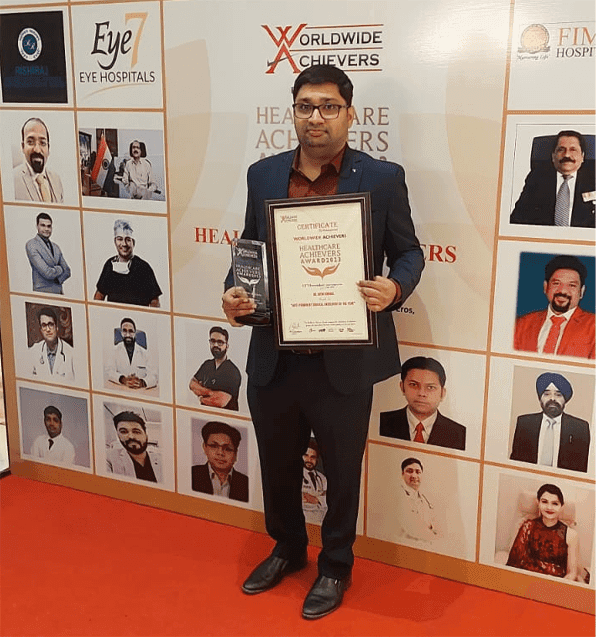
Most Prominent Surgical Oncologist of the Year 2023
Worldwide Achievers
 ABP LiveA Tribute To Exceptional Doctors: Doctor's Day Awards For Excellence In Healthcare
 Zee NewsCelebrating Excellence by Honoring Healthcare Professionals on this Doctor's Day
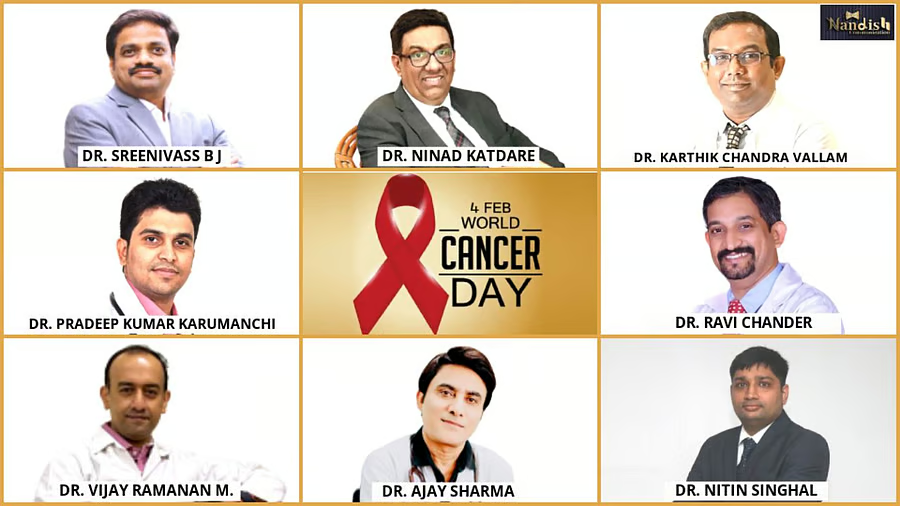 Deccan HeraldOn This 'World Cancer Day': 8 Best Oncologists Share Their Advice on the Increasing Risks of Cancer
Also featured in




Real patients share their treatment and recovery experience with Dr. Singhal.
Recognition
Dr. Nitin Singhal's work in surgical oncology has been featured across leading healthcare and media platforms.
ABP Live
Zee News
Deccan Herald
Lokmat Times
Ahmedabad Mirror
Republic News
Dailyhunt
Understanding Cancer
Anyone can. Risk rises with age, and individual risk depends on factors such as smoking, diet and exercise, family history, and exposures at work or in the environment.
Cells normally grow, divide, age and die, and are replaced. Sometimes cells mutate, grow out of control and form a mass, or tumour, instead of dying. Tumours can be benign or malignant. Malignant tumours can invade and destroy tissue, and can spread to other parts of the body — a process called metastasis, which represents late-stage disease.
Cancer is a genetic disease in the sense that it is caused by changes to the genes controlling how cells behave. Those changes are inherited in roughly 5–10 percent of cases; far more often they occur during a person's lifetime for reasons other than inheritance. Where there is a known family history of hereditary cancer, genetic testing is often recommended.
No. Cancer is not like a cold or the flu. You cannot catch it from someone who has it.
There is no vaccine against cancer itself, but there are vaccines against viruses known to cause cancer. HPV vaccination protects against strains linked to cervical, anal, throat and penile cancers. Hepatitis B vaccination reduces liver cancer risk. In both cases the vaccine protects against the virus, not the cancer directly.
Yes. When treatment appears to be working, a doctor may describe the cancer as being in remission — partial, where the cancer shrinks but does not disappear, or complete, where there is no longer any sign of it. The longer a complete remission holds, the less likely the cancer is to return, and at some point a doctor may call it cured.
Stage 0: the cancer is still where it started and has not spread to nearby tissue; often curable. Stage I: usually a small tumour that has not grown deeply into nearby tissue. Stages II and III: larger tumours or deeper growth into nearby tissue, possibly involving lymph nodes, but not other organs. Stage IV: the cancer has spread to other organs or parts of the body, sometimes called metastatic or advanced cancer.
Not always. Signs depend on where the cancer is and how large it is. Some cancers grow where they cause no symptoms until advanced — pancreatic cancer, for example, often causes nothing until it presses on other structures. General signs can include unexplained weight loss, fever, fatigue, pain, skin changes, changes in bowel or bladder habits, sores that do not heal, unusual bleeding or discharge, a lump or thickening, indigestion or trouble swallowing, a change in a mole or wart, and a persistent cough or hoarseness. These can all have other causes; if they persist, get them checked.
Chemotherapy uses drugs to destroy cancer cells, and can harm healthy cells too, which is where side effects come from. Targeted drugs block specific genes or proteins found in cancer cells and usually cause less harm to healthy cells, though side effects remain. Immunotherapy works with the immune system to treat the cancer.
Which screening tests you need, and from what age, varies by cancer type. Discuss with your doctor what applies to you and when.
Available at Sterling Hospitals, Gurukul and Sindhu Bhavan, Ahmedabad. Call 98 98 98 78 78 or book online.