

Osteoporosis is a condition that weakens bones and makes them more likely to break. It develops slowly and often causes no symptoms until a bone breaks. The hip, spine and wrist are the most often impacted bones.
📋 Overview
What is osteoporosis?
Osteoporosis is a condition that weakens bones and makes them more likely to break. It develops slowly and often causes no symptoms until a bone breaks. The hip, spine and wrist are the most often impacted bones.
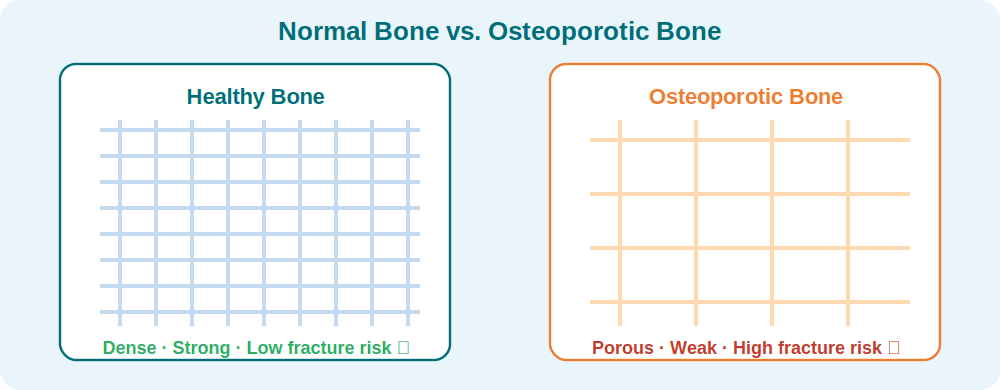
Healthy bone (left) vs. osteoporotic bone (right)—bones become porous and prone to fracture
Why is it important?
Osteoporosis increases the risk of fractures, even after a minor fall or injury. It is a common condition worldwide and can greatly affect quality of life if not managed early. Early diagnosis and treatment can:
- Prevent fractures
- Reduce pain and complications
- Improve mobility and quality of life
- Help doctors choose the right treatment (medications, lifestyle changes or surgery if needed)
Who is commonly affected?
- Osteoporosis is more common in older adults, especially as bones become weaker with age
- It is more common in women after menopause, but men can also be affected
- Risk is higher in people with:A family history of osteoporosis or fracturesLow body weightLong-term use of steroid medicinesPoor calcium intake or low physical activity
- A family history of osteoporosis or fractures
- Low body weight
- Long-term use of steroid medicines
- Poor calcium intake or low physical activity
⚡Causes—Why It Happens
Underlying causes
- Bone is a living tissue that is constantly being broken down and rebuilt
- Osteoporosis happens when bone loss occurs faster than the body can replace it
- Hormone changes, especially after menopause, can speed up bone loss
Risk factors
Lifestyle contributors
🔍 Signs & Symptoms
Osteoporosis usually causes no symptoms until a bone breaks. Warning signs can include back pain, loss of height, a stooped posture or fractures after a small fall or even a simple activity such as bending or lifting.
🏥 Diagnosis & Investigations
Clinical evaluation
To check your risk of osteoporosis, your doctor may ask about:
- Any previous fractures from a minor fall or simple activity (such as bending or lifting)
- Your medicines, family history of hip fracture, smoking, alcohol consumption and other health conditions that can affect bones
- Any falls or unsteadiness, because frequent falls increase fracture risk even if bone density is normal
Tests
- A bone density scan (dual-energy X-ray absorptiometry [DXA]) is the main test to check how strong your bones are
- You may also have blood tests to check calcium, vitamin D and other causes of bone loss
- Tools such as a fracture risk assessment tool (FRAX) may be used to estimate your chance of a future fracture and help decide if you need treatment
What patients should expect
- A DXA scan is quick and painless and uses very low‑dose radiation
- The results, together with your age and other risk factors, help the doctor decide whether you need lifestyle changes, medicines or both to protect your bones
💊 Treatment Options
Medications
- Medicines can help strengthen bones and reduce the risk of fractures
- Common first‑line treatments include weekly (or daily) tablets such as alendronate or risedronate, which slow bone loss
- If these are not suitable, or if your fracture risk is higher, other options such as injections (e.g., denosumab, zoledronic acid) or bone‑forming medicines may be considered
- Calcium and vitamin D supplements may be advised to support your bones, especially if your diet is low in these nutrients
Lifestyle changes
- Eat a healthy, balanced diet with enough calcium (from dairy, leafy greens, or fortified foods) and vitamin D (from sunlight, diet or supplements, if needed)
- Do regular weight‑bearing exercise (for example, walking or gentle resistance training) and muscle‑strengthening activities to help keep bones and muscles strong
- Stop smoking and limit alcohol intake, as smoking and heavy drinking can weaken bones and increase fracture risk
Non‑surgical management
- Reducing the risk of falls is a key part of care. This may include safe exercise, balance training and making your home safer (for example, removing trip hazards and improving lighting)
- If you have already had a fracture, pain relief, physiotherapy and support may help improve comfort and daily function
When is a procedure or surgery is needed?
- Osteoporosis itself is usually treated with medicines and lifestyle changes, not surgery
- Surgery may be needed if a fracture occurs, especially if the broken bone needs repair or internal support (such as plates, screws or joint replacement)
💡Myths & Facts
Osteoporosis only affects older women.
Both men and women are affected, and risk increases with age.
If there is no pain, the bones must be healthy.
Osteoporosis often causes no symptoms until a fracture occurs.
Drinking milk alone is enough to prevent osteoporosis.
Bone health also depends on exercise, enough vitamin D, not smoking and reducing risk of falls.
Nothing can be done once osteoporosis develops
Risk can be reduced with appropriate assessment and management.
❓Frequently Asked Questions
👶 Can young people develop osteoporosis?
Yes. Secondary osteoporosis can occur at any age due to medical conditions or medicines such as long-term steroids. Bone health habits in youth strongly influence future bone strength.
🩻 Is DXA scan safe?
Yes. It uses very low radiation—much less than a standard chest X-ray. It is a quick and painless procedure.
🔄 Can osteoporosis be reversed?
No, bone density cannot fully return to normal, but treatment can significantly slow further bone loss and reduce fracture risk.
🏃 Should I avoid exercise if I have osteoporosis?
No. Gentle, weight-bearing exercise is recommended. It helps strengthen bones and improves balance, reducing the risk of falls.
Speak to an orthopaedic specialist
Get an expert opinion and a personalised treatment plan at Sterling Hospitals.


